 Anacortes Exterior
 Edison Sits in One of Skagit County's Toughest Climates for Siding
Edison is a small, low-lying community, and homes here take a different kind of beating than houses further inland. Salt-laden air moves in off the water, driving rain comes in sideways during winter storms, and the combination of shade, moisture, and mild temperatures keeps moss and algae growing on north and west-facing walls for much of the year. None of that is unusual for this part of Skagit County — but it means siding here has to do more work than siding in a dry, sunny climate ever would.
A lot of siding failures we see in this area aren't dramatic. They're slow: a corner board that stays damp too long, a lap edge that wicks moisture, a finish that chalks and fades faster than it should. By the time a homeowner notices, the damage is usually further along than it looks from the ground. That's the environment we design every Edison siding installation around.
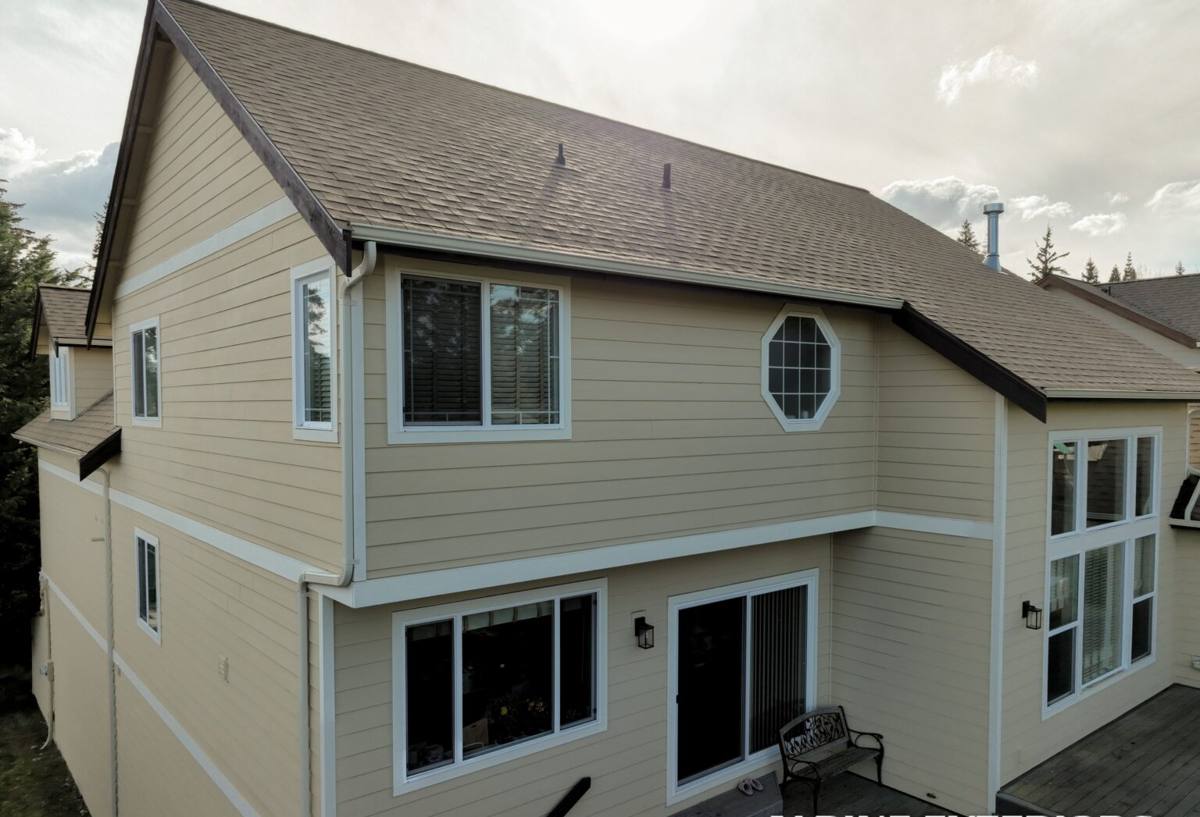
What Happens When Siding Isn't Matched to This Environment
Most exterior siding products are engineered and tested somewhere far from a marine climate. When they show up in Edison, the mismatch shows up too — just slowly, over a few seasons instead of a few weeks. Common patterns we see on homes here include:
- Moss and algae staining that keeps returning on shaded walls no matter how often it's cleaned
- Paint and coatings that fail early because they weren't formulated for constant damp/dry cycling
- Swelling, softening, or delamination at butt joints and panel edges where water sits
- Caulk joints that crack and open up gaps for wind-driven rain within a few years
- Fascia and trim rot at points where siding wasn't flashed or held off the surface correctly
Some of this comes down to the material itself. Some of it comes down to installation details that matter more here than they would in a drier climate. Both are worth understanding before you replace siding on an Edison home.
Why We Install Only James Hardie Fiber Cement Here
We don't install vinyl, LP SmartSide, Cemplank, Allura, primed spruce, or cedar. That's a deliberate standard, not a limitation of what we're capable of doing. In a climate like Edison's, the material itself is one of the biggest variables in how long a siding job actually lasts, and fiber cement has consistently held up better against salt air, moss, and sustained moisture exposure than the alternatives.
| Material | How it performs in Edison's climate |
|---|---|
| Vinyl siding | Can warp or become brittle with temperature swings and UV exposure over time; seams and panel edges give wind-driven rain a path behind the cladding |
| Wood/cedar siding | Naturally attractive but needs regular refinishing to resist rot and moss in a persistently damp, shaded climate |
| LP SmartSide (engineered wood) | Wood-based core is vulnerable if the factory finish is compromised at cuts, fastener holes, or damaged edges — a real risk in a wet climate |
| James Hardie fiber cement | Non-combustible cement-based core resists moisture damage, moss, and pests; factory ColorPlus finish is engineered to hold color and resist damage in coastal conditions |
Hardie's HZ5 product line is specifically engineered for climates like ours — freeze-thaw cycling, sustained moisture, and coastal exposure. The ColorPlus factory finish is baked on rather than field-applied, which matters in a climate where site-applied paint often struggles to cure and adhere properly during our wetter months. Hardie also carries a strong, transferable limited warranty when installed to manufacturer specification — something that matters more on a house that's going to face 30-plus years of Skagit County weather.
What We're Not Saying
Vinyl, wood, and engineered wood siding aren't bad products — they work well in plenty of climates and budgets. Our position is narrower than that: for homes in a marine environment like Edison's, we've seen enough long-term performance differences that we chose to specialize in one product system and install it correctly, every time, rather than offer several products and hope each one performs.
What a Correct Siding Installation Actually Involves
The material is only half the equation. A lot of siding problems in this area trace back to installation shortcuts, not the product itself. A correct James Hardie installation on an Edison home includes:
- A weather-resistant barrier (WRB) installed and lapped correctly behind the siding, not just stapled up as an afterthought
- Proper flashing at every window, door, and roof-to-wall transition — the points where most water intrusion actually starts
- Correct fastening pattern and fastener type, following Hardie's published specifications for our climate zone
- Panel and lap clearance from grade, decks, and roofing — Hardie's minimum clearances exist for a reason in a wet climate
- Field-cut edges primed or sealed per manufacturer instructions, since an unsealed cut edge is a weak point
- Caulking used only where it belongs — at trim and penetrations, not as a substitute for proper flashing
Skip any one of these steps and you can end up with a wall that looks fine from the curb but is already trapping moisture behind it. This is exactly where installation experience in a climate like Edison's pays for itself.
Our Process for an Edison Siding Project
- On-site assessment. We look at existing siding, sheathing condition, moisture entry points, and any rot or damage hiding behind the current cladding.
- Tear-off and sheathing check. Old siding comes off and we inspect the wall assembly underneath before anything new goes up — this is where hidden problems get caught early.
- WRB and flashing. The weather barrier and all flashing details go in first, since this layer does the real work of keeping water out.
- Hardie installation. Panels, lap, or shingle siding go up to manufacturer spec, with attention to fastening, clearances, and joint treatment.
- Trim and detail work. Corner boards, trim, and transitions are finished to shed water rather than collect it.
- Final walk-through. We go over the finished job with the homeowner before calling it done.
Choosing Colors and Styles That Hold Up in Coastal Light
James Hardie's ColorPlus palette gives Edison homeowners real options — lap siding, shingle-style accents, and panel siding, all available with a factory finish that's more consistent and durable than field-painted color. Because our light here tends to be softer and grayer for a good part of the year, a lot of homeowners lean toward tones that read well under both overcast skies and direct summer sun rather than colors chosen off a chart in bright showroom lighting. We'll walk through samples in natural daylight on your own property, since color always looks different against real siding, real trim, and real surroundings than it does on a small swatch.
Cost Factors for Siding Replacement in Edison
| Factor | Why it affects your cost |
|---|---|
| Home size and wall complexity | More corners, gables, and dormers mean more cutting, flashing, and labor time |
| Condition of existing sheathing | Rot or moisture damage found during tear-off requires repair before new siding goes on |
| Siding profile chosen | Lap, shingle-style, and panel siding involve different material and labor costs |
| Trim and detail scope | Full trim replacement adds cost but improves long-term water management |
| Access and site conditions | Tight lots, landscaping, or multi-story walls can affect labor and equipment needs |
We don't quote siding jobs off square footage alone — a walk-through gives a far more accurate picture than a phone estimate, especially once existing sheathing condition is factored in.
Why Hire a Crew That Already Works in Edison and Skagit County
Siding installation isn't one-size-fits-all across Washington. A crew that mostly works dry, inland climates doesn't necessarily bring the same habits around flashing details, clearance, and moisture management that a marine climate demands. Working regularly in Skagit County communities like Edison means we already know how this climate treats a wall over time, what details actually matter here versus what's optional elsewhere, and how to sequence a project around our wetter months so the wall assembly isn't left exposed longer than it needs to be. That local familiarity shows up in the parts of the job you can't see once the siding is up — which is exactly where most long-term problems start.
Living With Hardie Siding in a Moss-Prone Climate
Even the right material benefits from a little upkeep in this climate. A simple annual routine keeps an Edison home's siding performing the way it should:
- Rinse siding annually to clear salt residue, pollen, and early moss growth before it takes hold
- Keep gutters clear so overflow doesn't run down and saturate wall sections repeatedly
- Trim back vegetation and tree cover that keeps particular wall sections shaded and damp
- Check caulking at trim and penetrations every year or two and touch up as needed
- Walk the exterior after major storms to catch any impact damage or loosened trim early
None of this is heavy maintenance — it's the kind of routine upkeep that lets a correctly installed Hardie system reach its full lifespan instead of fighting this climate the whole way.
If your Edison home's siding is showing moss staining, soft spots, failing paint, or you're simply planning ahead for a replacement, we're happy to take a look and give you a straightforward, no-pressure estimate — just fill out the form below.