 Anacortes Exterior
 Why Fidalgo Island's Marine Climate Is Hard on Windows
Fidalgo Island sits where wind-driven rain off Rosario Strait meets a steady wash of salt-laden air, and that combination is tough on window systems in ways that inland climates simply aren't. If you've lived here more than a winter or two, you've probably noticed hardware that's gotten stiff, aluminum trim that's started to pit, or a green film that creeps across north-facing frames by February. Windows take the brunt of this exposure because they're an assembly of different materials — glass, frame, weatherstripping, fasteners, flashing — and every seam is a spot where salt air and moisture can get a foothold.
Windows built for a generic inland spec aren't engineered around this combination of stresses. Salt air speeds up corrosion on lower-grade hardware and screws. Wind-driven rain, common during Anacortes' fall and winter storm systems, works its way past seals and flashing details that would hold up fine somewhere drier. And the long stretch of damp, low-light months Skagit County sees from October through April gives moss and algae plenty of time to establish themselves on anything that stays wet — window sills and frame joints included.
What "Custom" Actually Means for Your Home
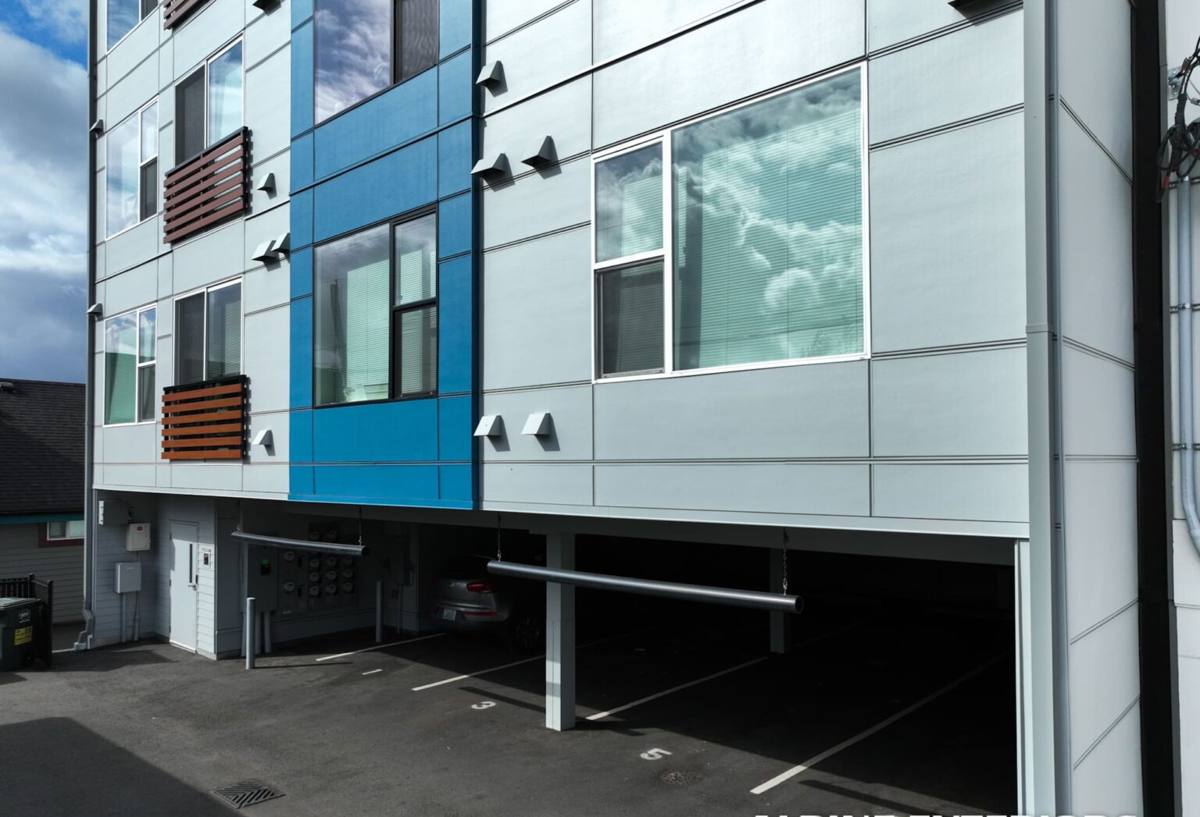
Custom doesn't mean upgraded trim or a fancier finish. It means the window is built and installed to fit your home's actual openings, structure, and exposure — not the nearest standard size. Older Fidalgo Island homes, especially those built or added onto before modern sizing standards, often have openings that are slightly out of square or don't match anything on a stock size chart. Waterfront and hillside homes add another layer: unusual sightlines, taller openings for view walls, or exposures that face directly into prevailing weather.
A custom approach also means matching the window to how that specific wall performs. A window on the windward side of a house catching direct weather off the water needs different sealing and flashing detail than one tucked under an eave on the leeward side. Treating every opening the same, regardless of exposure, is how you end up with one window on the house failing years before the rest.
Choosing the Right Frame Material for a Marine Environment
There's no single "best" frame material for every home — it depends on your budget, your home's style, and how exposed the specific wall is. What matters is understanding the honest trade-offs so you're not guessing.
| Frame Material | Salt Air / Moisture Behavior | Maintenance | Typical Trade-Offs |
|---|---|---|---|
| Vinyl | Won't corrode or rot; performs consistently in coastal exposure | Low — occasional cleaning | Limited color/profile options; frame is not paintable long-term |
| Fiberglass | Very stable in wet, salty conditions; minimal expansion/contraction | Low | Higher upfront cost than vinyl |
| Wood-clad (exterior clad) | Good if cladding and seams stay intact; interior wood adds warmth | Higher — cladding seams and any exposed wood need periodic inspection | Best suited to more protected exposures, not direct wind-driven rain walls |
| Aluminum | Prone to pitting and corrosion in salt air unless properly finished/protected | Moderate to high in this climate | Thin sightlines are attractive, but we're selective about where we recommend it here |
For homes with direct exposure to wind-driven rain and salt air — which describes a lot of Fidalgo Island — we generally steer homeowners toward vinyl or fiberglass on exposed elevations, and reserve wood-clad or aluminum for more protected walls or applications where the look is worth the added maintenance commitment. This isn't about one product being bad; it's about matching material to exposure so you're not fighting the climate for the next twenty years.
Glass and Weatherization Choices That Matter Here
The glass package affects comfort and energy use, but in this climate it also affects condensation and moisture behavior at the sill. A few things worth understanding before you pick a package:
Low-E Coatings and Gas Fills
Low-E glass reduces heat transfer and helps cut down on interior condensation during our cold, damp winters — which matters because condensation that sits on glass or drips onto a sill is exactly the kind of moisture that feeds mold and rot over time. Argon or krypton gas fills between panes add insulating value with no maintenance downside once installed.
Dual-Pane vs. Triple-Pane
Dual-pane with a good Low-E coating is adequate for most Fidalgo Island homes. Triple-pane adds meaningful benefit mainly on walls with heavy direct wind exposure, near busy roads where sound matters, or for homeowners prioritizing maximum efficiency — it comes at added cost and weight, which also affects hardware selection.
Sealant and Flashing Compatibility
Not every sealant and flashing tape holds up the same way against salt air and constant moisture cycling. We use materials rated for coastal exposure, not just whatever's fastest to install, because this is one of the most common places a technically fine window still ends up leaking.
The Installation Process — Where Most Window Jobs Actually Fail
In our experience, window failures in this climate are rarely about the window itself. They're almost always about the installation — specifically, how water is managed around the opening before the window ever goes in.
- Sill pan flashing: A properly sloped, sealed sill pan gives any water that does get past the window a path back outside instead of into the wall framing.
- Weather-resistant barrier integration: Flashing tape needs to be properly lapped into the house wrap or building paper, not just stuck over the top of it.
- Backer rod and sealant at the perimeter: Gaps need the right backer rod and a sealant rated for exterior, coastal exposure — not a bead of whatever's on the truck.
- Shimming and squaring: A window installed slightly out of square puts uneven stress on hardware and seals, which shows up as sticking sashes or premature seal failure years later.
- Interior and exterior trim sealing: Both sides need to be properly sealed and finished — an unsealed interior gap can pull moist air into the wall cavity even if the exterior looks fine.
Skipping or rushing any one of these steps is how a good window ends up with a bad reputation. It's also why we'd rather walk a homeowner through exactly what our install process covers than just quote a number.
Our Process, From Estimate to Final Walkthrough
- On-site assessment: We look at each opening individually — exposure direction, current condition, framing, and any signs of existing moisture issues — rather than quoting off a floor plan alone.
- Material and glass selection: We walk through frame material and glass package options based on that specific wall's exposure, your budget, and how the home is used.
- Precise measurement and ordering: Custom units are measured and ordered to the actual opening, not a rounded standard size.
- Removal and prep: Old units come out carefully, and we check the opening for any hidden rot or damage before anything new goes in — better to catch it now than after the new window is sealed in place.
- Flashing, sealing, and installation: Sill pan, flashing integration, shimming, and sealing are done to the standard described above, on every unit, not just the ones facing the weather.
- Interior and exterior finish work: Trim, caulking, and touch-up work are completed so the install looks finished inside and out.
- Final walkthrough: We check operation, seals, and finish work with you before calling the job done.
Maintenance for Fidalgo Island's Moss Season
Even a well-installed, well-chosen window needs a little seasonal attention in this climate. The good news is it doesn't take much time.
- Clear debris and moss buildup from sills and tracks a couple of times a year, especially after the wet fall and winter months.
- Rinse salt residue off frames and glass periodically if your home faces open water or is close to the shoreline.
- Check that weep holes (the small drainage openings at the base of the frame) stay clear so water can drain instead of pooling.
- Lubricate hardware annually — locks, hinges, and rollers — to keep salt air from seizing moving parts.
- Inspect exterior caulking once a year and touch up any spots that have cracked or pulled away.
Signs Your Current Windows Are Already Losing the Battle
Some of the earliest warning signs are easy to miss until they've turned into a bigger repair. Worth checking for:
- Fogging or haze between panes on double- or triple-pane units — this means the seal has failed and the insulating gas is gone.
- Soft, spongy, or discolored wood at the sill or lower frame corners.
- Windows that are hard to open, close, or lock, or that have started to feel loose in the frame.
- Visible pitting, chalky residue, or corrosion on hinges, locks, or cranks.
- Persistent moss or algae growth on frames or sills that comes back quickly after cleaning.
- Noticeable drafts or a cold feeling near the glass even when the window is fully closed.
Any one of these on its own might just mean a minor repair. Several of them together, especially on the same wall, usually means the window and its installation are past the point where patching makes sense.
Why Local Experience on Fidalgo Island Matters
A crew that's spent time working on Fidalgo Island homes understands how exposure changes block by block — a home tucked into a wooded lot handles moisture differently than one facing open water on the windward side of the island. That experience shows up in small decisions: which walls get the more moisture-resistant frame material, where extra flashing detail is worth the time, and how to sequence a job around our wet season instead of fighting it.
It also matters for the practical side of the job. Anacortes and Skagit County have their own permitting requirements for window replacement, and knowing that process ahead of time keeps a project from stalling partway through. Local experience isn't a marketing line — it's the difference between a crew guessing at what this climate needs and one that's already seen what works and what doesn't, house after house.
If your windows are showing their age, or you're planning a renovation and want it done right the first time, we're happy to take a look and give you a straightforward, no-pressure estimate. Fill out the form below and we'll get in touch to schedule a time that works for you.