 Anacortes Exterior
 Windows Built for Edison's Particular Kind of Weather
Edison sits close enough to the water that salt air reaches window frames and hardware year-round, not just during storms. Add Skagit County's driving winter rain and the long stretch of damp, low-light months that keep moss and algae growing on north-facing walls, and you've got a climate that is genuinely tough on windows. It's not dramatic weather most of the year — it's persistent weather, and persistent moisture is what actually breaks windows down over time.
A window that would hold up fine in a drier inland climate can fail early here if it's installed without the right flashing details, the wrong sealant is used, or a frame material isn't suited to constant humidity and salt exposure. We've seen enough of it on Edison-area homes to know that "custom windows" means more than picking a style out of a catalog. It means building the installation around what this specific location does to a house.
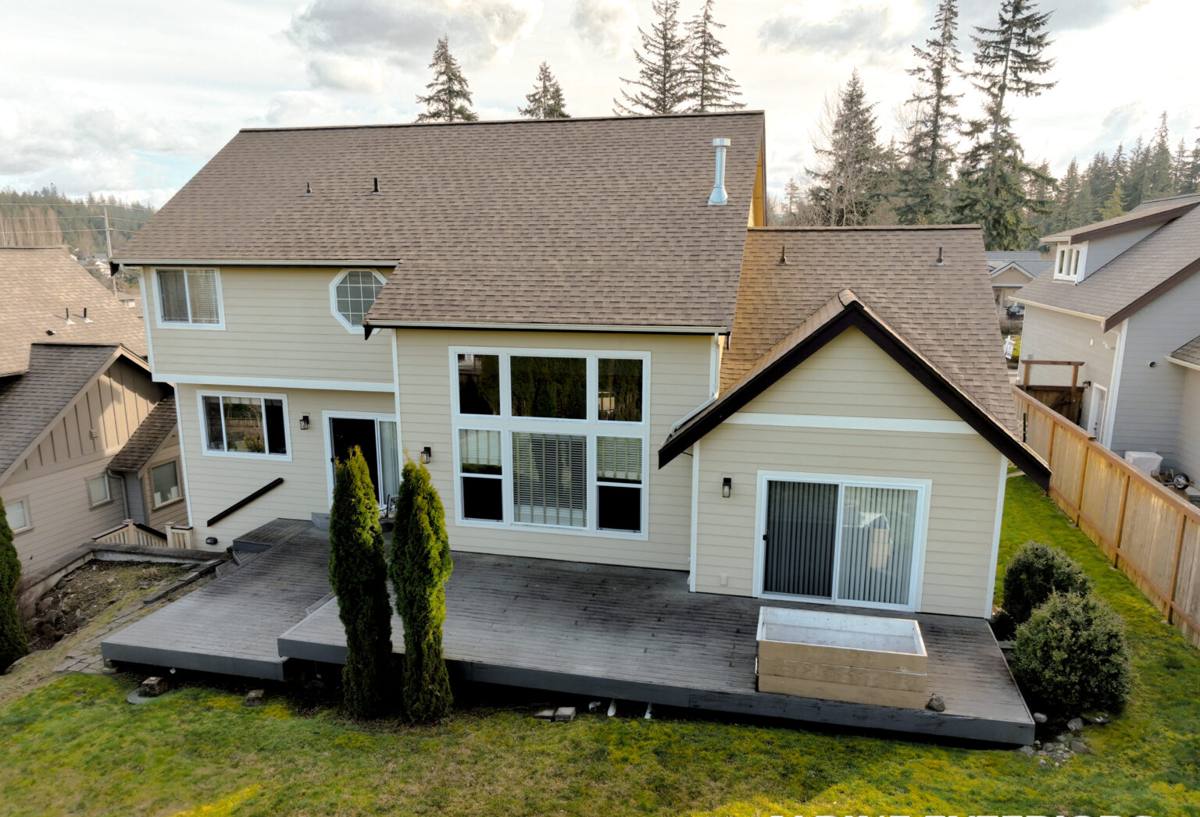
What Salt Air, Rain, and Moss Season Actually Do to Windows
Salt Air
Salt-laden air corrodes metal hardware — hinges, locks, balance mechanisms, and screws — faster than it would inland. On aluminum-clad or aluminum-frame windows, salt exposure can also lead to pitting and finish breakdown over the years. It's a slow process, which is exactly why it's easy to overlook until a window won't latch properly or the finish looks chalky and pitted.
Driving Rain
Wind-driven rain doesn't just hit a window head-on — it gets pushed sideways and upward under trim, siding, and poorly sealed flanges. If the flashing isn't layered correctly (each piece overlapping the one below it, shingle-style, so water is always directed outward and down), rain works its way behind the window and into the wall framing. That's how you get hidden rot that isn't visible until siding or interior trim is pulled back.
Moss and Algae Season
Skagit County's long damp season keeps shaded and north-facing surfaces wet for months at a time. Moss and algae hold moisture against wood trim, sills, and siding around window openings, which accelerates rot in exactly the areas where a tight seal matters most. Homes with mature trees or homes tucked into shade see this more than open, sun-exposed lots.
What a Correct Custom Window Installation Involves
The window unit itself is only part of the job. Around here, the installation details matter as much as the product:
- Sill pan flashing under every window opening, so any water that does get past the window has a sloped, sealed path back out instead of soaking into the framing.
- Shingle-lapped flashing tape integrated with the house's weather-resistive barrier — installed in the correct order so water always sheds outward and down.
- Compatible sealants matched to the siding and trim material, since the wrong caulk can fail or even damage certain siding finishes within a season or two.
- Proper shimming and squaring so the window operates smoothly and the seal around the frame stays consistent instead of gapping on one side.
- Drip caps or head flashing above the window where trim design allows, giving driving rain one more surface to shed off of rather than run down the wall.
Skip any one of these and the window can look fine from the outside for years while moisture quietly does damage behind the trim. This is the part of the job that doesn't show up in a product brochure but is exactly where problems start on homes in this climate.
Choosing a Frame Material for a Coastal, High-Moisture Climate
There's no single "best" window material — the right choice depends on the home's exposure, budget, and how much upkeep an owner wants to take on. Here's how the common options hold up under Edison's conditions:
| Frame Material | Salt Air / Moisture Behavior | Maintenance | Typical Fit |
|---|---|---|---|
| Vinyl | Won't corrode or rot; performs well in salt air | Low — occasional cleaning | Most Edison homes, budget-conscious replacements |
| Fiberglass | Very stable in moisture and temperature swings; strong resistance to salt exposure | Low | Homes wanting a slimmer profile or paintable finish |
| Wood-clad (exterior-clad) | Good if cladding and flashing are done right; wood core still needs the seal maintained | Moderate — watch caulk lines and finish over time | Homes prioritizing an interior wood look |
| Aluminum | Prone to pitting and corrosion closer to the water over time | Higher near salt exposure | Less common as a primary choice this close to the coast |
We'll talk through these trade-offs honestly for your specific home rather than pushing one option — a shaded, damp lot and an open, sunny lot in the same neighborhood can call for different answers.
Common Window Problems We See on Edison-Area Homes
A few issues show up repeatedly on older or improperly installed windows in this area:
- Wood sills and trim soft or rotting where moss and standing moisture have sat against them for years.
- Fogged or hazy double-pane glass — a sign the seal between panes has failed and the insulating gas has escaped.
- Hardware that's stiff, corroded, or won't latch fully, especially on windows facing prevailing weather.
- Drafts or a damp smell near the window frame, often pointing to flashing that was never installed correctly in the first place.
- Paint or finish bubbling on wood-clad frames, usually a sign moisture is getting trapped rather than shedding.
None of these mean a home needs all-new windows immediately, but they're worth having looked at before they turn into a framing repair.
Our Custom Window Process
1. On-Site Assessment
We look at each opening individually — sun and wind exposure, existing flashing condition, and any signs of moisture already at work — before recommending anything.
2. Measuring and Product Selection
Custom windows are built to the exact opening, not a standard size, which matters on older homes where openings have shifted slightly over the decades. We'll walk through frame material, glass options, and style based on what the home actually needs.
3. Careful Removal
Old windows and trim come out with attention to what's underneath — this is often when hidden rot or old flashing mistakes get found, and we'll flag anything that needs addressing before the new window goes in.
4. Flashing and Weatherproofing First
Sill pans, flashing tape, and any needed sheathing repair happen before the new window is set. This is the step that determines whether the installation holds up through the next twenty winters, not just the next one.
5. Installation, Shimming, and Sealing
The window is set square and level, shimmed correctly, and sealed with materials compatible with your siding and trim.
6. Trim, Cleanup, and Walkthrough
Interior and exterior trim is finished to match the home, the site is cleaned up, and we walk through the work with you before calling it done.
What Affects the Cost of Custom Windows
Every home is different, so exact pricing depends on a walkthrough, but these are the main factors that move the number:
| Factor | Why It Matters |
|---|---|
| Number and size of openings | More or larger windows means more material and labor |
| Frame material | Vinyl, fiberglass, and wood-clad carry different material costs |
| Glass package | Double-pane vs. triple-pane, low-E coatings, and tempered glass where required by code |
| Condition behind the old window | Rot or flashing repair adds time before the new window can go in |
| Access and height | Second-story or hard-to-reach openings take more setup time |
| Trim and finish work | Matching existing interior/exterior trim profiles adds labor |
We give straightforward, itemized estimates so you can see what's driving the cost rather than a single lump number.
Signs It's Time to Look at Your Windows
- Visible moss, algae, or dark staining on the sill or trim
- Fogging or condensation trapped between panes
- Windows that feel drafty or won't stay latched
- Paint peeling or wood feeling soft to the touch around the frame
- Noticeably higher heating bills without another clear cause
- Visible gaps between the window frame and siding or trim
Why It Matters to Hire a Crew That Already Works in Edison
Skagit County building requirements, the realities of working around this area's rain patterns, and the way salt air and moss season interact with different siding and trim materials aren't things you learn from a manual — they come from doing the work here repeatedly. A crew that already works in and around Edison and Anacortes knows what flashing details actually hold up through a real Pacific Northwest winter on this stretch of coastline, and won't be guessing at how a product performs in conditions it was never tested against locally.
If your windows are original to the home, showing signs of wear, or you're planning a remodel that includes new openings, we're glad to take a look and give you a straightforward assessment — no pressure, no upsell. Use the form below to request a free estimate and we'll go from there.