 Anacortes Exterior
 Building Decks That Actually Hold Up in Conway
Conway sits in the lower Skagit County lowlands, close enough to the tidal flats and Puget Sound air that salt-laden moisture is a real factor in how a deck ages — not just a coastal-town talking point. Add in the region's long wet season, heavy morning dew, and the shade cover that a lot of Conway lots have from surrounding trees and fields, and you get a climate that is genuinely hard on outdoor structures. A deck built the same way you'd build one in a dry inland town will show problems here faster: soft spots, rust streaks, slick moss growth, and fasteners that back out or corrode within a few seasons.
We build custom decks for homes in Conway and the surrounding Anacortes and Skagit County area with that reality in mind from the first design conversation. That means material choices, fastener grade, drainage detail, and framing decisions are all made around how this specific climate behaves over ten and twenty years, not just how the deck looks the day it's finished.
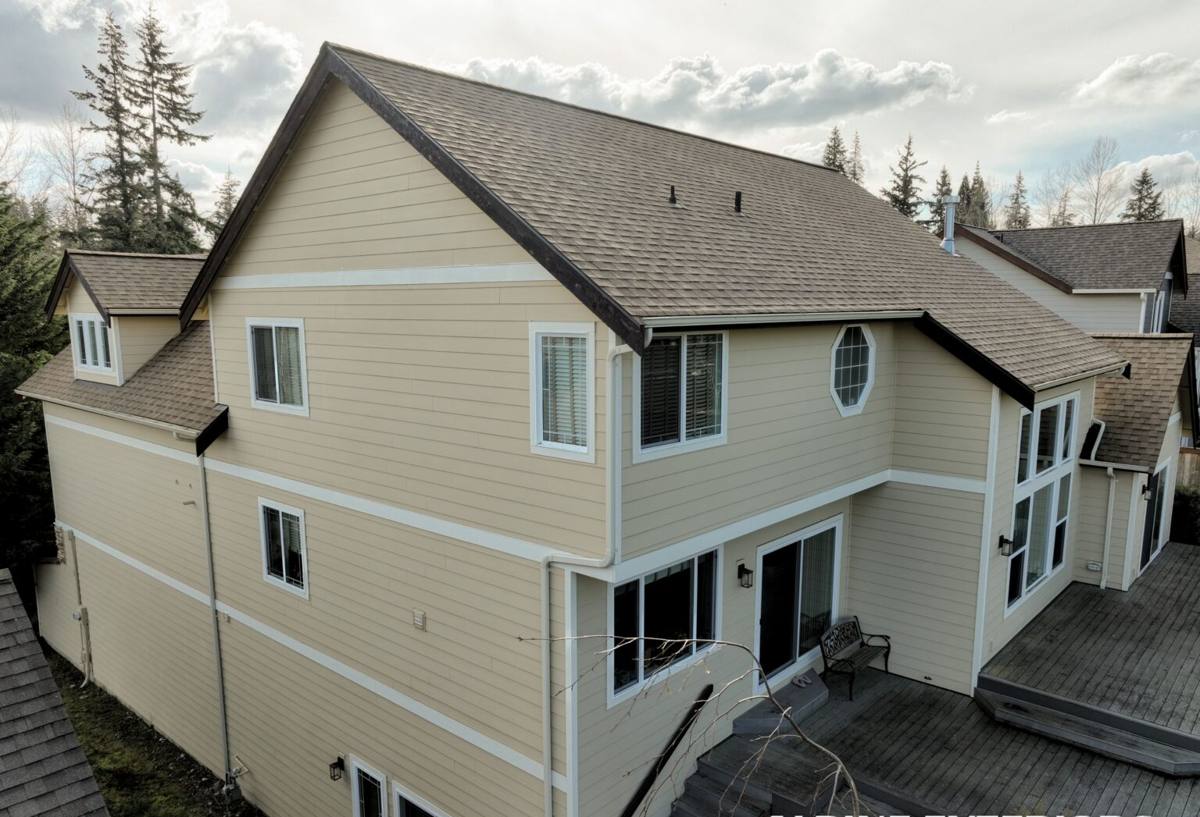
What Salt Air, Driving Rain, and Moss Actually Do to a Deck
It helps to understand the specific failure patterns we're designing against, because they're different from generic "weather damage."
Salt Air and Corrosion
Airborne salt from the Sound accelerates corrosion on any exposed metal — nails, screws, joist hangers, railing brackets, and post bases. Standard hot-dip galvanized hardware can start showing rust bleed within a few years in this environment, and once a fastener corrodes it weakens, stains the surrounding wood or composite, and eventually needs replacement — often after it's already caused damage to the material around it.
Driving Rain and Moisture Intrusion
Wind-driven rain doesn't fall straight down here the way it does in a lot of the country. It gets pushed sideways into ledger connections, under railing posts, and into any gap where flashing was skipped or done poorly. Water that gets trapped against a house band board or pools on a poorly sloped deck surface is the single biggest cause of rot we see in older decks throughout Skagit County.
Moss and Algae Growth
Shaded, damp decking grows moss and algae fast, especially through fall and winter. Beyond looking neglected, a mossy deck surface is genuinely slippery and dangerous, and moss holds moisture against the decking material longer than it would otherwise sit, which shortens the life of wood decking in particular.
Design and Material Choices for Conway Properties
There's no single "right" decking material for every home — it depends on your budget, how much maintenance you want to do, sun exposure, and how close your lot is to open water or tree cover. Here's how the common options actually compare for this climate.
| Material | Moisture & Salt Air Behavior | Moss Resistance | Maintenance |
|---|---|---|---|
| Pressure-treated fir/hem-fir | Good if properly sealed and re-coated; end grain and fastener holes are the weak points | Needs regular cleaning; textured surface holds moss | Annual cleaning, re-sealing every 1-2 years |
| Cedar | Naturally moisture and insect resistant, but still needs sealing near salt air | Moderate — tighter grain sheds moss better than fir | Cleaning and oil/sealer every 1-2 years |
| Composite decking | Excellent — doesn't absorb water or rot, unaffected by salt exposure | Good on capped boards; textured grain can still hold moss film | Periodic washing, no sealing or staining |
| PVC decking | Excellent — fully synthetic, no wood fiber to hold moisture | Good; smoothest surfaces resist moss buildup best | Low — occasional washing |
For a lot of Conway homeowners, capped composite or PVC decking ends up being the practical choice specifically because it removes the sealing and re-staining cycle that wood demands in this climate. That said, we still build plenty of cedar and quality pressure-treated decks for clients who want the look and feel of real wood — the key is setting honest expectations about the upkeep involved and building the substructure correctly underneath either option.
Rail and Baluster Materials
Railings take the brunt of driving rain because they're the most exposed part of the structure. Wood top rails and posts need the same sealing discipline as decking. Metal cable or aluminum rail systems hold up well against moisture but require corrosion-resistant hardware at every connection point, or they become the first thing to show rust streaks down the face of the deck.
Framing and Structural Work That Doesn't Show — But Matters Most
The parts of a deck nobody sees are the parts most likely to fail if they're built wrong. This is where a lot of shortcut decking jobs go bad, usually years after the crew that built them is gone.
Ledger Attachment and Flashing
Where a deck attaches to the house is the single most important detail on the entire structure. We flash the ledger board properly with self-adhering membrane and metal flashing shedding water away from the house band board, and we use structural screws or through-bolts rated for the load — not just nails. A poorly flashed ledger is the number one cause of hidden rot behind decks we're asked to inspect or rebuild in this region.
Footings and Post Bases
Skagit County's soil can hold water longer than well-draining ground further inland, so footing depth and drainage gravel matter more here than in drier climates. We set post bases above grade on properly sized concrete footings so posts never sit in standing water, and we use corrosion-resistant post base hardware rated for exterior, coastal-adjacent use.
Joist Protection and Spacing
We cap or tape joists to protect the top edge from trapped moisture, and we set joist spacing to match the decking material's requirements — composite and PVC boards often need tighter joist spacing than wood to prevent flexing over time. Joist hangers get corrosion-resistant coated or stainless fasteners, not standard hardware that will streak and weaken faster in salt-laden air.
Deck Surface Drainage
A correctly built deck surface has a slight slope away from the house — usually about a quarter inch per foot — so water sheets off instead of pooling. Combined with proper board gapping, this is what actually keeps a deck from holding the standing moisture that leads to rot and moss growth in the first place.
Our Deck-Building Process
Every custom deck we build in Conway follows the same disciplined process, adjusted for your specific lot, sun exposure, and how the house is oriented relative to prevailing wind and rain.
- On-site consultation: We look at the house structure, grading, drainage, sun and shade patterns, and talk through how you actually want to use the space.
- Design and material selection: We walk through decking, railing, and fastener options honestly, including maintenance trade-offs for your specific site conditions.
- Permitting: We handle the permit application and coordinate any required inspections through Skagit County or the relevant local jurisdiction.
- Structural build: Footings, framing, ledger flashing, and joist work — the parts that determine how long the deck actually lasts.
- Decking, railing, and finish work: Surface installation, railing systems, stairs, and any trim or lighting details.
- Final walkthrough: We go over maintenance expectations specific to the material you chose so there are no surprises down the road.
Permits and Local Requirements
Most new decks and significant deck rebuilds in Skagit County require a building permit, particularly once you're above a certain height off grade or attaching structurally to the house. Requirements can vary depending on whether your Conway property falls under county jurisdiction or a nearby municipal boundary, and there are additional considerations for lots near shoreline or floodplain areas given the proximity to the Skagit River delta and Puget Sound. We pull the correct permits and coordinate inspections as part of the build, so you're not left sorting that out on your own or discovering a compliance issue after the fact.
Maintaining a Deck Through a Skagit County Winter
Even a well-built deck needs some seasonal attention in this climate. The good news is that a properly designed deck needs a lot less work than one that was built without these details in mind.
- Sweep leaves and debris off the surface regularly through fall — trapped organic material holds moisture and feeds moss growth
- Rinse or scrub visible moss and algae before it gets established, especially on shaded sections of the deck
- Check railing posts and stair connections annually for movement or corrosion staining around fasteners
- Re-seal or re-stain wood decking on the manufacturer's recommended schedule, typically every one to two years in this climate
- Clear gutters and downspouts near the deck so roof runoff isn't dumping extra water onto or under the structure
- Confirm gaps between boards stay clear so water continues to drain through rather than pooling on the surface
Why Hire a Crew That Already Works in Conway
Deck-building fundamentals are the same everywhere, but the details that make a deck last in this specific environment are learned through actually building and later repairing decks in Skagit County conditions. We've seen how quickly the wrong fastener grade shows rust here, which framing shortcuts turn into rot behind a ledger board, and which materials handle the region's shade and moisture without turning into a moss farm within a couple of seasons. That's knowledge you only get from doing the work locally, repeatedly, not from a general contracting playbook written for a drier part of the country.
Working with a crew based near Anacortes also means straightforward scheduling, a contractor who's familiar with the relevant county permitting process, and someone who'll actually be around afterward if a fastener needs attention or you have a maintenance question a few years down the line.
Getting Started
If you're planning a new deck or replacing an aging one on your Conway property, we're happy to walk the site, talk through material options honestly, and put together a clear plan built for how this climate actually treats outdoor structures. Reach out for a free, no-pressure estimate using the form below.