 Anacortes Exterior
 Cap Sante sits close enough to the water that its homes take a different kind of weather beating than houses a few miles inland. Salt-laden air off Fidalgo Bay, wind-driven rain that finds every gap in a window's flashing, and a long, damp moss season that keeps wood and vinyl surfaces wet for months at a stretch — all of it adds up to windows that fail faster here than the manufacturer's brochure promises. If you're planning a window replacement or install on a Cap Sante property, the details that matter aren't the same details that matter on a dry-side job forty miles east.
Why Cap Sante Windows Wear Differently
Anacortes homes in general deal with marine exposure, but Cap Sante's position — close to open water with regular wind off the bay — pushes that exposure a notch higher. Salt air is corrosive to unprotected metal hardware, window screens, and lesser-grade aluminum components. Combined with near-constant humidity, it also accelerates wood rot at sills and jambs on older homes that still have their original wood-frame windows.
Driving rain is the other half of the problem. Wind off the water doesn't just fall straight down — it drives sideways into window assemblies, testing flashing and sealant details that would never be stressed on a calmer site. A window that's watertight in a light rain can still leak under wind-driven conditions if the flashing wasn't lapped correctly or the sill pan wasn't sloped to shed water outward.
Then there's moss. Skagit County's wet season runs long, and north- and west-facing walls in shaded or tree-adjacent Cap Sante lots can stay damp for weeks. Moss and algae growth around window trim traps moisture against wood and caulk joints, which shortens the life of both. It's cosmetic at first, but it's also an early warning sign of a moisture problem that's building underneath.
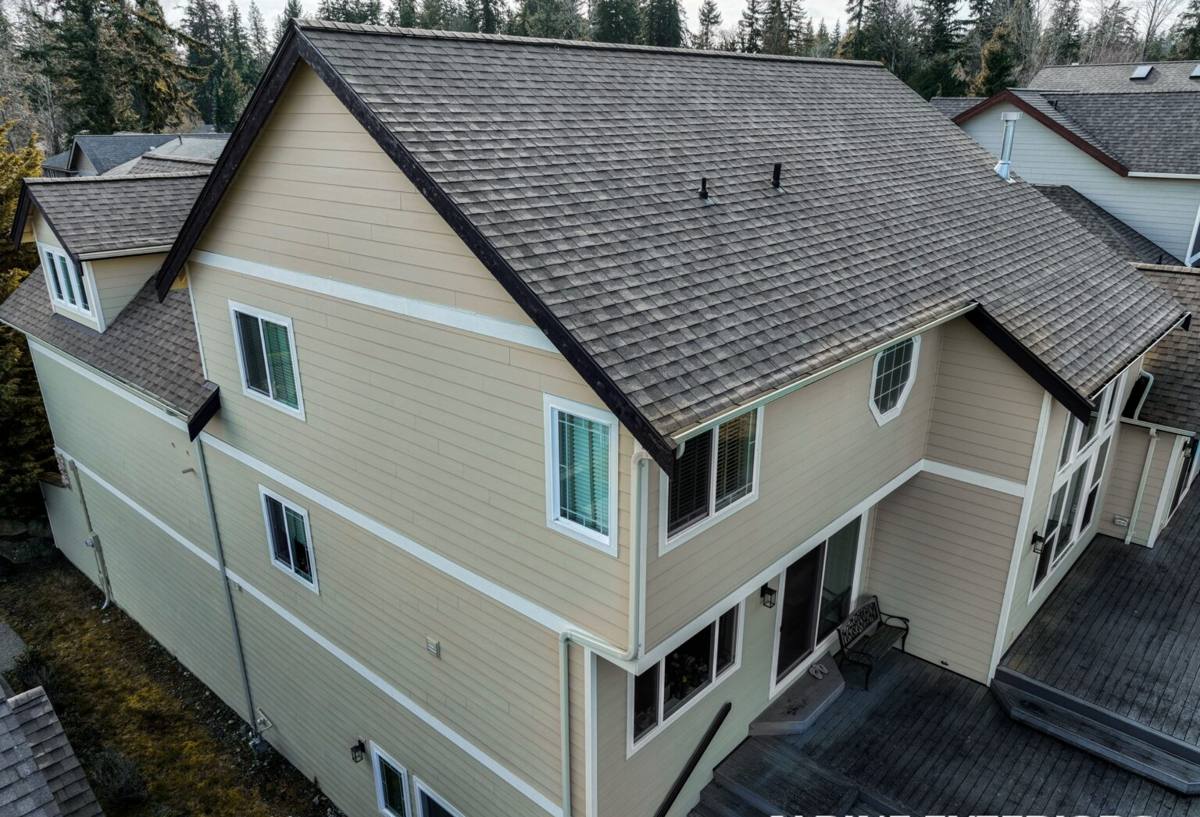
What a Correct Installation Looks Like Here
A window install that's built for Cap Sante's conditions isn't fundamentally different in its steps from a standard install — it's different in how carefully each step is executed, because there's less margin for error.
Flashing and Water Management
The single biggest factor in whether a window leaks in five years is how the flashing and sill pan were detailed at install. That means a sloped sill pan that directs any intruded water back outside rather than into the wall cavity, properly lapped flashing tape (bottom-up, so upper layers overlap lower ones), and integration with the home's existing weather-resistive barrier — not just caulk sealing the gaps and calling it done.
Fastener and Hardware Selection
In a marine air environment, fastener and hardware corrosion resistance matters more than it does inland. We use fasteners and hardware rated for coastal exposure rather than standard-grade parts, because a corroded hinge or lock mechanism on a five-year-old window is a common — and avoidable — service call in this area.
Sealant Selection and Joint Design
Not all exterior sealants perform the same under constant damp-dry cycling. We use sealants rated for sustained moisture exposure and UV exposure, applied with proper joint width and backer rod where needed, rather than a thin bead that looks fine on install day but fails after a wet winter.
Choosing the Right Window for a Cap Sante Home
Frame material and glass package both affect how well a window holds up to salt air and driving rain over time. There's no single "best" answer — it depends on the home's exposure, budget, and how much upkeep the owner wants to take on.
| Frame Material | Coastal Performance | Maintenance |
|---|---|---|
| Vinyl | Good — resists corrosion, no repainting needed | Low; occasional cleaning of tracks and weep holes |
| Fiberglass | Very good — dimensionally stable, resists warping | Low; holds paint well if a custom color is wanted |
| Aluminum | Fair — needs corrosion-resistant hardware and coatings in salt air | Moderate; watch for pitting and hardware corrosion over time |
| Wood (clad exterior) | Good on the exterior face if properly clad; interior wood still needs care | Higher; exposed wood trim and sills need regular inspection |
For most Cap Sante homes, we steer clients toward vinyl or fiberglass frames precisely because they don't depend on an intact paint or coating layer to resist corrosion — that's one less maintenance task in an environment that already asks a lot of a home's exterior. Wood-frame and unclad wood windows can still be the right call for a period-correct restoration, but we're upfront that they'll need closer attention to caulking, painting, and sill inspection than a vinyl or fiberglass replacement would.
Glass Packages
Double-pane, low-E glass with argon fill is the practical standard for this climate — it cuts heat loss in winter and reduces solar gain in the brief stretches of strong summer sun, without the added cost of triple-pane, which rarely pencils out for a moderate marine climate like Anacortes's.
Signs a Cap Sante Home Needs Window Replacement
- Soft or spongy wood at the sill, jamb, or trim when pressed
- Visible moss, algae, or persistent dark staining around the window frame
- Fogging or condensation between panes, indicating a failed seal
- Drafts or noticeable air movement near the frame during windy weather
- Difficulty opening, closing, or locking — often a sign of frame warping or hardware corrosion
- Visible daylight or gaps at the frame-to-wall junction
- Paint that's peeling or bubbling specifically around window trim, even if the rest of the siding looks fine
Our Process for a Cap Sante Window Project
We keep the process straightforward, but we don't skip the inspection steps that matter most in this location.
- On-site assessment. We look at every window being considered, checking sills, jambs, and surrounding siding for hidden rot or past water intrusion — not just the glass and frame that are visible from inside.
- Product recommendation. Based on the wall's exposure (is it facing open water and prevailing wind, or more sheltered?), we recommend frame material and glass package rather than defaulting to one option for the whole house.
- Removal and prep. Old windows come out carefully so we can inspect the rough opening for rot or moisture damage before anything new goes in. Any damaged framing gets repaired first — installing a new window over a compromised opening just delays the same problem.
- Flashing and sill pan installation. This is the step that determines long-term water performance, and it's where we spend the most careful attention.
- Window setting and shimming. Proper shimming keeps the frame square and prevents the operational problems that come from a racked installation.
- Sealing and trim. Exterior sealant, trim, and any paint or caulk touch-up to match the home's existing finish.
- Final walkthrough. We test operation, check for drafts, and confirm everything closes and locks properly before we consider the job done.
Why Local Experience Matters for This Job
Window installation looks similar on paper everywhere, but a crew that regularly works Cap Sante and the rest of Anacortes knows which walls take the worst of the wind-driven rain, which older homes in the area tend to have original wood windows with hidden rot, and how aggressively moss and algae build up on shaded elevations here compared to a drier inland town. That's knowledge that shows up in small decisions — how a sill pan is sloped, which sealant gets used, whether a wall needs extra flashing detail — that a crew unfamiliar with Skagit County's coastal conditions might not think to apply.
We also know that a rushed install in this climate tends to show its problems within a year or two, not decades later. Getting the water management details right the first time costs less than diagnosing and repairing a leak after it's already damaged interior framing or drywall.
Cost Factors for Cap Sante Window Projects
| Factor | Why It Affects Cost |
|---|---|
| Number of windows | Per-window cost typically drops on larger multi-window projects |
| Frame material | Fiberglass generally costs more than vinyl; wood clad varies by manufacturer |
| Existing rot or water damage | Hidden sill or framing repair adds labor and material beyond the window itself |
| Window size and configuration | Custom sizes, bay windows, or large picture windows cost more than standard sizes |
| Access and wall height | Second-story or hard-to-access windows can add labor time |
We don't quote a flat per-window number sight unseen, because the condition of the existing opening — especially on older Cap Sante homes — can change the scope significantly. An honest estimate comes after we've actually looked at the windows and the wall behind them.
Get a Free Estimate
If you're noticing drafts, moisture damage, or windows that just don't operate the way they used to, it's worth having someone take a look before the damp season makes it worse. We offer free, no-pressure estimates for window installation and replacement in Cap Sante and the surrounding Anacortes area — fill out the form below and we'll get back to you with a straightforward assessment.