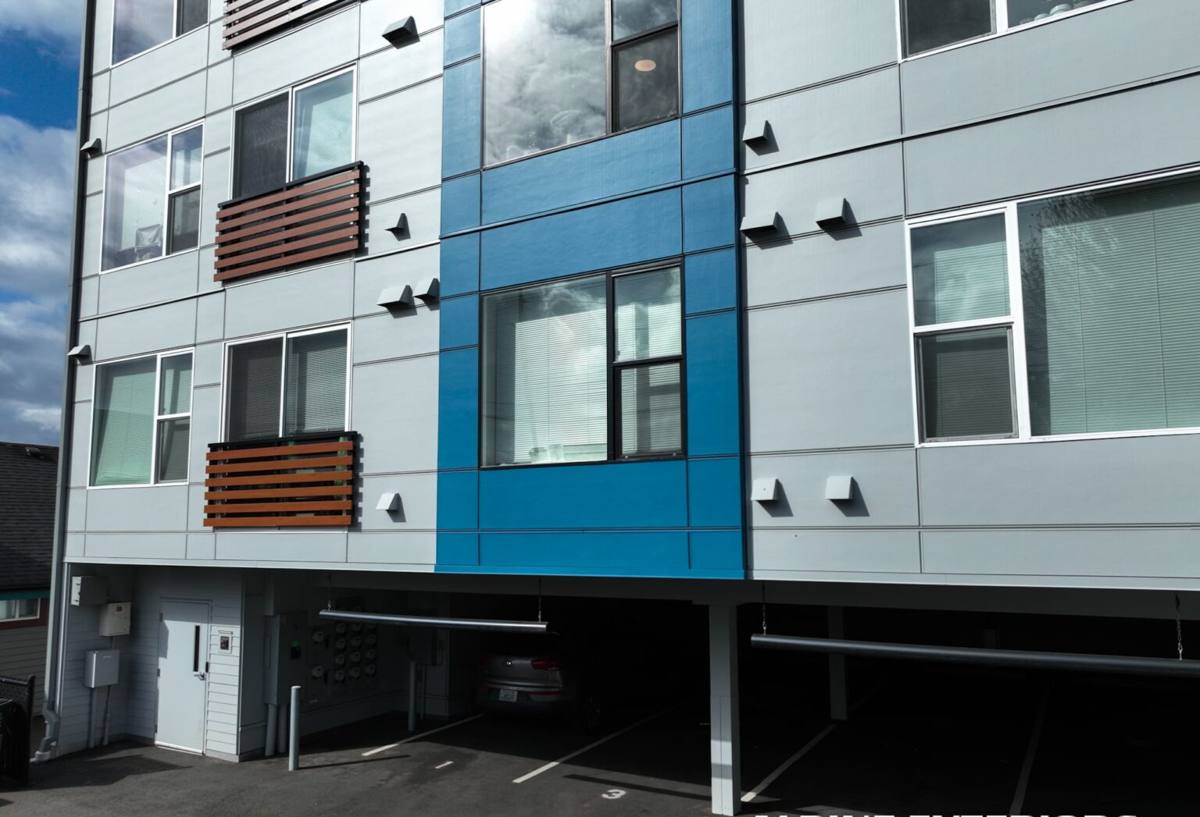
 Anacortes Exterior
 Bow sits in the rural stretch of Skagit County between Samish Bay and Padilla Bay, where farmland, tidal water, and wooded hillside all meet within a few miles of each other. Houses out here tend to sit more exposed than in town — fewer neighboring rooflines to break the wind, more open sky for weather to build over before it reaches the coast — and that shows up directly in how siding ages. We replace siding on homes throughout Bow and the surrounding area, and this page is about that one job specifically: what local homes actually need from a siding replacement, what a correct install involves, and why the climate here changes the calculation more than most homeowners expect.
Why Siding Wears Faster in Bow Than It Does Inland
Three things stack on top of each other in Bow that don't all show up together in most parts of the country. First, salt-laden air off Samish Bay and Padilla Bay travels further inland than people expect, especially during winter storms, and it accelerates corrosion at fasteners, flashing, and any exposed metal trim. Second, driving rain — wind-pushed rain that hits a wall at an angle instead of falling straight down — is a regular event here, and it finds every weak seam, gap, or under-flashed penetration that would never get tested in calmer weather. Third, the long moss season that much of western Washington lives with runs even longer on the shaded, damp-prone sides of Bow properties, where tree cover and proximity to water keep surfaces from fully drying out for months at a time.
None of that means a house in Bow is fighting a losing battle. Plenty of homes here have held up for decades. It means the material and the installation details matter more than they would somewhere drier or more sheltered, and that a generic, one-size-fits-all siding job tends to show its weaknesses earlier here than it would elsewhere in the county.
How to Tell Your Home Needs Replacement, Not Another Repair
Siding failure in this climate is usually gradual, and it's easy to keep patching individual problems for years before recognizing the whole system is past the point of spot repair. A few signs tend to show up before a full failure does:
- Soft, spongy, or visibly swollen siding, especially near the bottom courses, corners, or anywhere water sheets off a roofline
- Paint or finish that keeps failing within a year or two of repainting, which usually means moisture is working from behind rather than just weathering the surface
- Persistent moss or dark staining on the same sections season after season, even after cleaning
- Visible gaps, warping, or separation at seams and butt joints, particularly on walls facing the prevailing weather off the water
- Rising heating bills or drafts that suggest the wall assembly behind the siding is no longer doing its job
- Siding that's original to a home built more than 20-25 years ago, especially if it's wood-based or an older composite product
Any one of these on its own might be a repair. Several of them together, or any sign of water having actually reached the sheathing, usually means it's time to look at full replacement rather than another round of patching.
Why We Install Only James Hardie Fiber Cement Here
We install James Hardie fiber cement siding exclusively. In a place like Bow, that's not a marketing preference — it's a response to what the climate actually does to a wall system over years of exposure. Fiber cement doesn't have an organic core for moisture to work into the way wood-based products do, and it doesn't go brittle or chalky the way vinyl can after years of UV and salt exposure. Hardie's ColorPlus finish is baked on at the factory under controlled conditions rather than field-applied, which matters when a house here sees more wet-dry cycles per year than a comparable home further inland.
Hardie also builds its HZ5 product line specifically for regions with heavier moisture exposure, including the Pacific Northwest, rather than selling one generic formulation nationwide. That distinction is part of why we standardized on the brand instead of treating fiber cement as interchangeable between manufacturers. Homeowners occasionally ask us about vinyl, LP SmartSide, primed wood, or cedar. We don't install any of them — not because they're bad products everywhere, but because we don't think they hold up as well as fiber cement against Bow's specific combination of salt air, driving rain, and sustained moss pressure, and we'd rather say so upfront than install something we don't believe will last on this stretch of coastline.
What a Correct Siding Replacement Actually Involves
The siding itself is the part a homeowner sees. Everything underneath it is what determines whether the job lasts fifteen years or fifty. A replacement done right moves through several stages, and skipping or rushing any one of them is where most premature failures start.
Tear-Off and Sheathing Inspection
Full removal of the old siding is the only way to actually see what's happening behind it. This is where we find soft or rotted sheathing, compromised framing, or evidence of past moisture intrusion that never showed on the surface. Any damaged sheathing gets replaced before anything new goes on — covering a compromised wall with new siding just hides the problem for another decade.
Weather-Resistive Barrier and Flashing
A new weather-resistive barrier goes on next, along with flashing at every window, door, and penetration. This layer is the actual waterproofing system; the siding on top of it is a rain screen, not a seal. In a climate with as much wind-driven rain as Bow sees, correctly lapped flashing — installed so water sheds outward at every layer rather than getting trapped behind it — is one of the details that separates a job that lasts from one that doesn't.
Installing to Hardie's Climate Spec
James Hardie publishes specific installation requirements — fastener spacing, clearances above grade and roof lines, gaps at butt joints, and proper caulking at penetrations — and following them to the letter is what keeps the manufacturer's warranty valid. It also happens to be what keeps water out. We install to that spec on every job, not just the ones where a homeowner asks about it.
Trim, Caulking, and Finish
Trim boards, corner details, and caulking at every joint and penetration finish the job. These are small details individually, but on a property catching direct weather off the bay, a poorly caulked joint or an undersized clearance gap is exactly the kind of thing that turns into a moisture problem two or three winters down the road.
Comparing Siding Options for a Bow Property
| Factor | Vinyl | Wood or Engineered Wood | James Hardie Fiber Cement |
|---|---|---|---|
| Moisture resistance | Depends entirely on the barrier behind it; can go brittle with age | Vulnerable at cut edges and fastener holes if moisture reaches the core | No organic core; resists moisture-driven swelling and rot |
| Salt air / coastal exposure | Can chalk, fade, and become brittle under sustained UV and salt | Finish breaks down faster; needs more frequent recoating near water | Factory-baked ColorPlus finish holds up to repeated wet-dry cycles |
| Moss and mildew | Grows on the surface in shaded, damp areas | Organic surface supports growth if maintenance lapses | Less hospitable to organic growth on the surface |
| Maintenance | Low, but damaged panels are hard to color-match later | Regular recoating, caulk renewal, and moss treatment needed | Periodic washing; no recoating required for the finish's warranted life |
| Fire resistance | Combustible | Combustible | Non-combustible |
| Typical warranty structure | Varies by manufacturer, often prorated | Varies widely; often product-only | Long-term, transferable material warranty plus a separate finish warranty |
No product on this table is unusable everywhere. The comparison is specifically about how each one behaves under Bow's combination of salt air, wind-driven rain, and extended moss season — and that's the context we weigh when we tell a homeowner what we recommend.
How Our Process Works, Start to Finish
We start with a free, no-pressure walkthrough of the property, looking at the current siding's condition, the wall assembly underneath where it's visible, and which sides of the house are taking the worst of the weather off the bay. From there we put together a scope and a written estimate before any work begins, so there's no ambiguity about what's included. Once a project is scheduled, tear-off, sheathing repair, barrier and flashing work, and Hardie installation typically move through in a continuous sequence rather than getting spread out over unrelated visits, which keeps the wall assembly from sitting exposed to weather any longer than necessary. We walk the finished job with the homeowner before calling it done, and we stand behind the workmanship in addition to whatever Hardie's own material warranty covers.
Why a Crew That Already Works Bow Matters
Bow isn't a dense neighborhood with rows of similar houses — it's a mix of farmhouses, waterfront properties, and homes tucked into the tree line, each sitting differently relative to wind, sun, and water exposure. A crew that works this specific stretch of Skagit County regularly develops a feel for which walls take the worst of the weather, which sides hold moss longest, and which flashing details actually matter here versus which ones are just code minimum everywhere else. That kind of judgment doesn't come from a crew that occasionally drives out from somewhere else for a one-off job — it comes from doing this work, on homes like these, on a regular basis.
What to Check Before Hiring for Siding Work in This Area
- Ask specifically how the contractor handles wind-driven rain and flashing, not just which siding brand they carry
- Confirm fasteners and hardware they use are appropriate for coastal or marine-adjacent exposure, not standard-grade only
- Get a clear, written answer on both the manufacturer's material warranty and the contractor's own workmanship warranty
- Ask whether old siding is fully removed for a sheathing inspection, or whether new material is being installed over the existing wall
- Verify the contractor is licensed, bonded, and insured to perform exterior work in Washington State
Caring for New Siding After Installation
Fiber cement installed to spec doesn't need much, but a little attention keeps it performing at its best in this climate. A yearly rinse-down removes salt residue and organic buildup before it has a chance to establish, particularly on shaded or north-facing walls where moss pressure is highest. Keeping gutters clear and vegetation trimmed back from the walls helps siding dry out fully between storms instead of staying damp for extended stretches. Caulking at trim and penetrations is worth a visual check every couple of years, since caulk is the one component of the system with a shorter service life than the siding itself. None of this is a heavy maintenance burden compared to wood or vinyl — it's closer to occasional upkeep than a recurring project.
If your Bow home's siding is showing its age, or you just want an honest read on whether it's a repair situation or a replacement situation, we're happy to take a look. Reach out for a free, no-pressure estimate — we'll walk the property, tell you what we actually see, and lay out options that fit the house and the budget either way.