 Anacortes Exterior
 Custom Windows Built for Bow's Marine Climate
Bow sits in that stretch of Skagit County where farmland meets saltwater — close enough to Samish Bay and the open water of Puget Sound that homes here take a different kind of weather beating than houses twenty miles inland. Salt-laden air off the water corrodes hardware and finishes faster than most manufacturers' warranties account for. Driving rain, pushed sideways by wind off the bay, finds every gap in a poorly flashed window. And the long gray stretch from fall through spring gives moss and algae months to take hold on north-facing trim and sills where sun never quite reaches. None of that is unique to any one house in Bow — it's the baseline every window on a home here has to survive, year after year.
"Custom windows" gets used loosely in this trade, so it's worth being precise about what it actually covers before getting into the climate and installation side of things.
What "Custom" Actually Means for a Bow Home
Custom work generally falls into three categories, and most projects we see in Bow involve at least one of them:
- Custom-sized replacements — older farmhouses and cabins in this area were often framed before standard window sizing existed. The opening doesn't match anything off a shelf, so the unit has to be manufactured to that exact rough opening.
- Custom shapes — arched openings, angled gable windows, or odd transoms above a door that need a purpose-built frame rather than a stock rectangle.
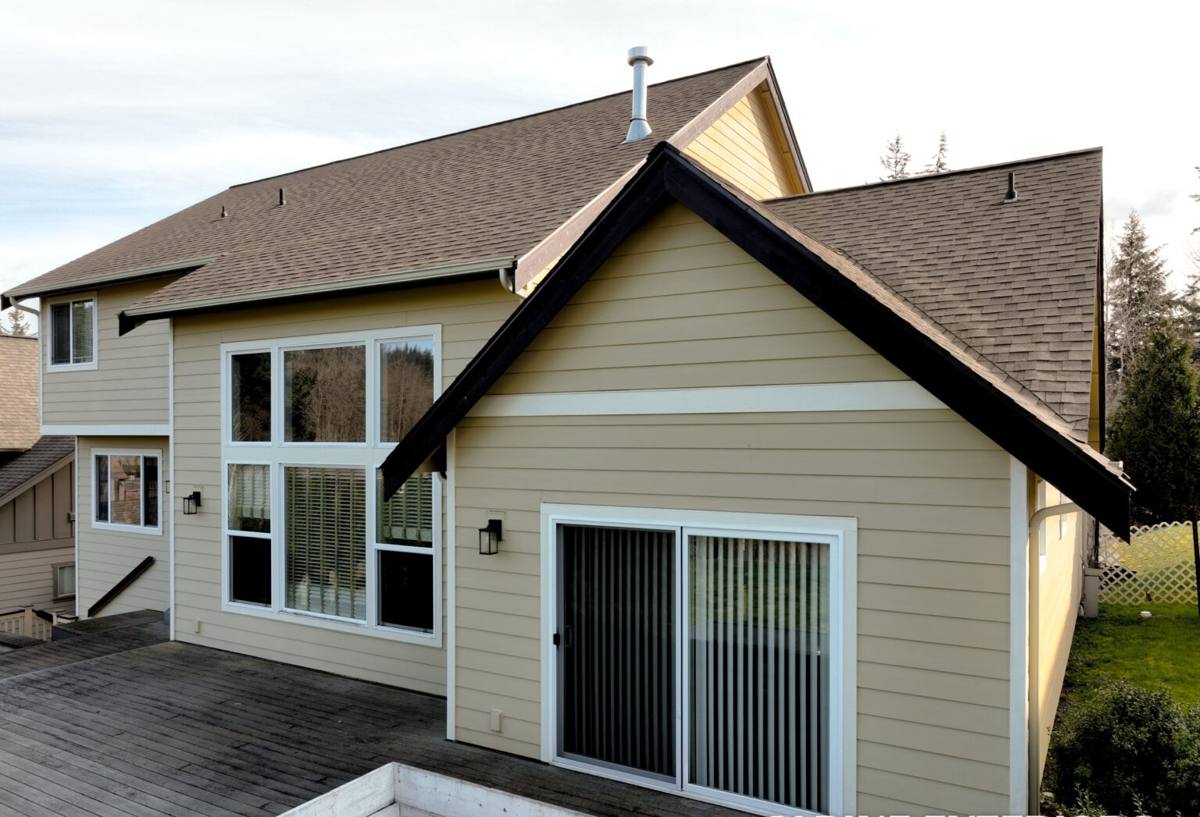
- Custom configurations — combining fixed picture windows with operable casements or sliders in one assembly, common when a homeowner wants a wide view window toward the water or the fields without giving up ventilation.
The common thread is that none of these can be picked off a shelf at a box store and installed as-is. They're ordered to spec, which means measurement accuracy and lead-time planning matter more than on a standard tract-home job.
The Climate Factors That Actually Drive the Decisions
Salt Air and Corrosion
Homes closer to Samish Bay and the shoreline take on airborne salt that settles on exterior surfaces and works into any exposed metal. Cheap hinge hardware, uncoated fasteners, and lower-grade weatherstripping clips corrode faster in this environment than they would twenty miles inland. It doesn't ruin a window overnight — it's a slow failure that shows up as stiff operation, streaking corrosion stains below hardware, and hinges that eventually seize.
Driving Rain
Wind off the water pushes rain sideways into a house rather than straight down, which means the flashing and sill detailing around a window matters more here than it would on a sheltered inland lot. A window that's watertight in calm conditions can still leak under wind-driven rain if the sill pan, house wrap integration, or flashing tape wasn't done correctly. This is an installation issue far more often than a product defect — the window itself is rarely the point of failure.
Moss and Algae Season
Skagit County's wet season runs long, and north- and west-facing exterior trim around windows stays damp for weeks at a stretch. Wood trim without a good paint or clad system will host moss and algae growth in that environment, which holds moisture against the surface and accelerates rot at the sill and corners. This is one of the biggest arguments for low-maintenance cladding on the exterior face of a custom window, even when the interior stays wood for appearance.
Frame Material Comparison for This Climate
There's no single "right" material for every house — it depends on budget, how the home is used, and how much upkeep the owner actually wants to do. Here's how the common options hold up against Bow's specific conditions:
| Material | Salt air / corrosion resistance | Moisture & moss resistance | Maintenance |
|---|---|---|---|
| Vinyl | Good — no metal to corrode on the frame itself | Good, though sill tracks need periodic cleaning | Low |
| Fiberglass | Very good — dimensionally stable, resists pitting | Very good | Low |
| Aluminum-clad wood | Fair — depends heavily on hardware quality and finish | Good on the exterior face; interior wood still needs care | Moderate |
| Solid wood | Poor without diligent upkeep near salt exposure | Poor if trim isn't repainted or resealed regularly | High |
We don't push solid wood exteriors on homes close to the water in this area — not because wood windows are a bad product, but because the maintenance burden in a marine climate is real and most owners underestimate it until they're repainting sills every couple of years. A clad exterior with a wood or vinyl interior gets you the look without that upkeep cycle.
Getting the Installation Right
The product only performs as well as the install lets it. On every custom window job we do around Bow, a few things get non-negotiable attention:
- Sill pan flashing — a sloped, sealed pan under the rough opening so any water that does get past the window drains out and away from the framing instead of sitting on the sill.
- Housewrap integration — flashing tape has to shingle correctly with the existing weather-resistive barrier so water sheds over each layer, not under it.
- Corner sealing — the corners of a rough opening are where most leaks actually originate, not the middle of the sill.
- Shimming and squaring — an out-of-square unit binds, doesn't seal evenly, and wears hardware faster, especially once salt air starts working on the moving parts.
Skipping any of these is invisible on install day and shows up as a leak or rot two or three winters later — which is exactly the timeline where it's hardest to trace back to the original work.
How Our Process Works
We keep this straightforward on purpose:
- On-site assessment — we look at the actual opening, the existing flashing condition, and how exposed that side of the house is to wind and rain.
- Precise measurement — custom units are ordered to the opening, not the other way around, so this step doesn't get rushed.
- Material and configuration recommendation — based on exposure, budget, and how much maintenance you want to take on long-term.
- Ordering and lead-time planning — custom units take longer to manufacture than stock sizes, and we tell you that timeline upfront rather than guessing.
- Installation with full flashing detail — sill pan, housewrap integration, and sealing done to the standard above, not shortcuts to save a half-day.
- Site cleanup and a final walkthrough — checking operation, seals, and exterior finish before we consider the job done.
Signs Your Current Windows Are Already Struggling
Before assuming a full custom replacement is needed, it's worth checking for these — they tell you whether the problem is the window itself or just wear that maintenance could still address:
- Visible corrosion streaking below hinges or locking hardware
- Moss or dark algae buildup on exterior sills and trim that returns within weeks of cleaning
- Soft or spongy wood at the sill or lower corners when pressed
- Drafts or whistling during wind events, even with the window latched
- Fogging or a persistent haze between panes on double-pane units (a sign the seal has failed)
- Difficulty opening or closing that's gotten noticeably worse over a year or two
- Visible daylight or gaps around the frame from inside
If you're seeing two or more of these on the same window, it's usually past the point where caulking and a repaint fix it.
Maintenance Once the New Windows Are In
Even a well-installed, well-matched window benefits from a bit of seasonal attention in this climate. Rinsing salt residue off exterior surfaces a few times a year, keeping weep holes and sill tracks clear of debris so water can actually drain, and checking exterior caulking annually for cracking are the main things that extend the life of the install. None of it is heavy work — it's the difference between a window performing well for decades and one that starts showing problems in year six or seven because nobody ever looked at it.
Why a Crew That Already Works Bow Matters
A lot of window problems in this area trace back to installers who do good work in drier, more sheltered parts of the state but don't adjust their approach for wind-driven rain and salt exposure near the water. Flashing details that are "good enough" inland aren't always good enough on a lot exposed to weather coming off Samish Bay. Working this specific stretch of Skagit County regularly means we're not guessing at exposure levels or figuring out moisture behavior for the first time on your house — we've already seen how the local conditions play out on homes nearby, and we build the job around that instead of a generic install checklist.
If you're weighing custom windows for a home in Bow, we're happy to take a look and give you an honest read on what your specific opening, exposure, and budget actually call for — no pressure, no upsell. Fill out the form below and we'll set up a free estimate.