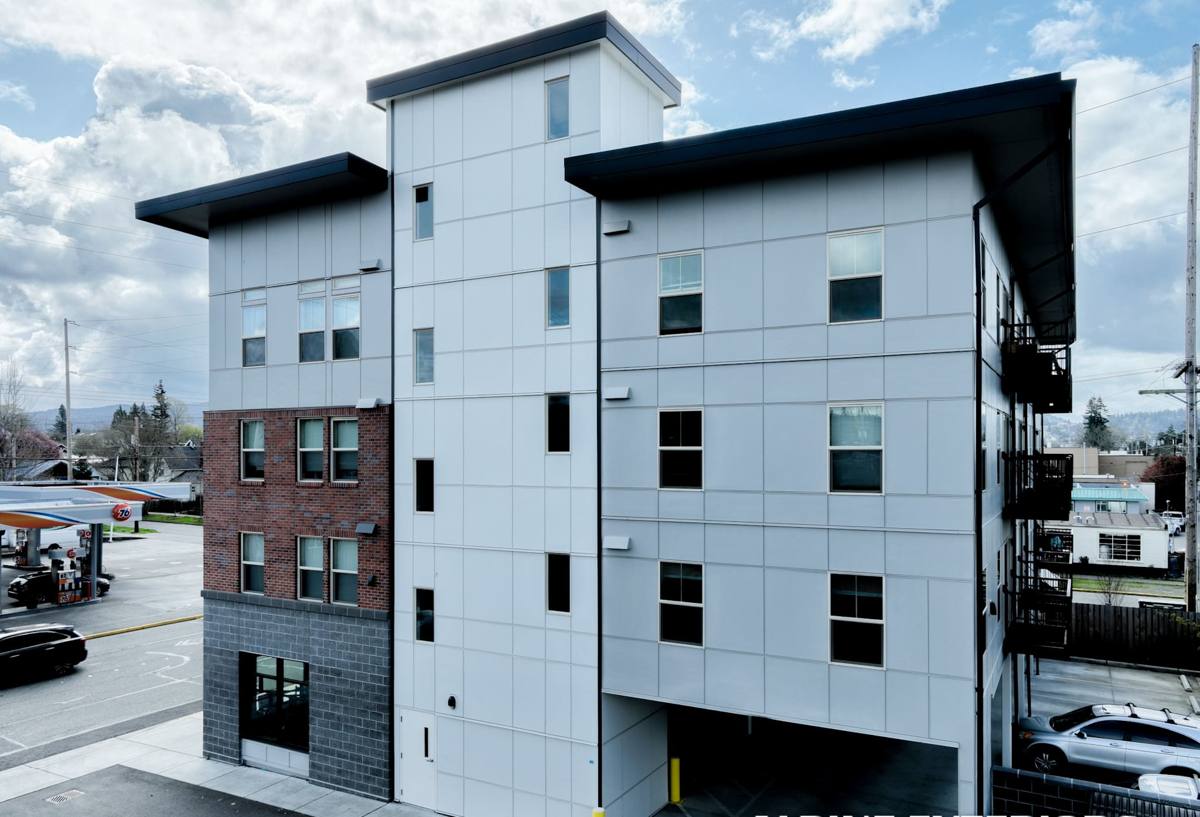
 Anacortes Exterior
 Why Board & Batten Works Well in Flounder Bay
Board and batten has been a fixture of Pacific Northwest coastal architecture for a reason: the vertical lines shed water cleanly, the profile reads as substantial from the street, and it pairs naturally with the mix of traditional and modern homes you see around Anacortes and the rest of Fidalgo Island. In Flounder Bay specifically, where homes sit close to open water and take on more wind and salt exposure than houses further inland, the siding you choose and how it's installed matters more than it would in a sheltered subdivision.
This page is about one job in one place: board and batten siding installed correctly for Flounder Bay's specific conditions, by a crew that already works this part of Skagit County and understands what the bay throws at a house over a Pacific Northwest winter.
What the Local Climate Does to Vertical Siding
Flounder Bay's location puts homes closer to salt spray, sustained wind, and driving rain than properties set back from the water. Board and batten siding has more seams and more exposed fastener lines than plain lap siding, so how those details are handled determines whether the siding performs for decades or starts failing in the first few winters.
Salt Air and Coastal Exposure
Salt-laden air accelerates corrosion on fasteners, flashing, and trim. It also degrades paint finishes faster than inland exposure, which is one of the reasons factory-cured finishes hold up better here than field-applied paint on wood or engineered wood products.
Driving Rain and Wind-Driven Moisture
Wind off the water doesn't just bring rain down — it drives it sideways and up under laps, seams, and trim edges. Vertical board and batten has to rely on correct batten spacing, fastening, and a drainage plane behind the siding to keep that moisture from finding a way to the sheathing.
Moss, Algae, and Shade
Between the marine humidity and the tree cover common on this side of the island, north- and west-facing walls stay damp longer through the fall and winter. Moss and algae growth on siding isn't just cosmetic — sustained moisture retention on a wall surface is what eventually finds the seams that aren't detailed correctly.
Why We Install Only James Hardie Board & Batten
We don't install engineered wood, vinyl, cedar, or primed spruce board and batten, and we're upfront about why. Engineered wood siding depends on an intact factory coating and careful field sealing at every cut and seam — a fair product when installed and maintained exactly to spec, but one that leaves little room for error in an environment that's already testing every seam on the house. Vinyl board and batten is affordable and low-maintenance, but it's a thin, flexible material that can warp or crack under UV and temperature swings, and it doesn't hold paint if a homeowner ever wants to change the look. Cedar and primed spruce look great on day one but require ongoing refinishing to keep moisture out, which is a real maintenance commitment on a house that's already dealing with salt air and a long wet season.
James Hardie fiber cement is non-combustible, dimensionally stable, and doesn't rely on a maintained paint film the way wood does — the ColorPlus finish is baked on at the factory and backed by its own finish warranty. For a bay-front house, that stability matters more than it does further inland. We use Hardie's HardiePanel vertical siding with battens, specified in the HZ5 formulation engineered for the Pacific Northwest's wet climate zone, which is the version built for exactly the conditions Flounder Bay sees.
What a Correct Installation Actually Involves
Board and batten looks simple from the street, but it's less forgiving of shortcuts than lap siding because there's no overlap doing the work of shedding water — the details have to be right the first time.
Furring, Rainscreen, and Drainage
On a house exposed to wind-driven rain, we install over vertical furring strips that create a drainage gap behind the panel. That gap lets any moisture that gets past the surface drain and dry out instead of sitting against the sheathing — a detail that matters more on a bay-facing wall than it would on a sheltered inland lot.
Fastener Pattern and Batten Spacing
Panel width, batten spacing, and fastener placement all need to follow Hardie's published installation instructions to keep the warranty valid and to control how the wall handles expansion and contraction through temperature swings. Corrosion-resistant fasteners are non-negotiable this close to salt air — the wrong fastener is often the first point of failure on coastal jobs.
Flashing, Trim, and Penetrations
Windows, vents, hose bibs, and outdoor lighting are the places water actually gets in. Correct flashing and sealant details at every penetration matter more here than the panels themselves — most siding failures we get called out to investigate trace back to a flashing detail, not the siding material.
Board & Batten vs. Lap Siding for This Setting
Homeowners in Flounder Bay often ask us to compare the two most common Hardie profiles before deciding. Both perform well when installed correctly; the differences below are about labor, appearance, and maintenance rhythm, not durability.
| Factor | Board & Batten | Lap Siding |
|---|---|---|
| Visual style | Vertical lines, farmhouse/modern look | Traditional horizontal shadow lines |
| Seams per wall | More vertical seams to detail correctly | Fewer seams, relies on overlap |
| Install labor | Higher — furring, battens, precise spacing | Lower — more standardized process |
| Moss/algae visibility | Shows on flat board faces | Shows in shadow lines and laps |
| Best paired with | Accent walls, gables, modern facades | Full-house coverage, classic styles |
Our Process for Flounder Bay Projects
The process itself isn't different from house to house, but the pace and sequencing we use in a bay-exposed location is deliberate.
Assessment and Weather Window
We walk the exterior, check the condition of the sheathing and any existing moisture damage, and plan the job around a dry weather window — tear-off and house wrap installation need dry conditions to do right, and Anacortes weather doesn't always cooperate on a fixed schedule.
Tear-Off and Wall Prep
Old siding comes off, sheathing gets inspected and repaired where needed, and a water-resistive barrier goes on before anything else. This is the stage where hidden moisture damage from a previous installation usually shows up, and it has to be dealt with before new siding goes on top of it.
Furring, Panels, and Battens
Furring strips go up first to create the drainage gap, then panels and battens are installed to Hardie spec with corrosion-resistant fasteners and correct spacing throughout.
Trim, Flashing, and Final Walkthrough
All trim, flashing, and caulking gets finished and inspected before we walk the job with the homeowner, checking every seam, corner, and penetration before calling it complete.
Why a Local Anacortes Crew Matters
A crew that already works Flounder Bay and the rest of Anacortes has already dealt with the permitting expectations, the wind patterns off the water, and the seasonal rhythm of Skagit County weather. That's not a marketing point — it's the difference between a crew that has to relearn local conditions on your house and one that's already accounted for them in the schedule and the details.
Working this area repeatedly also means we've seen how different exposures on the same street perform over time — which walls hold moss, which corners take the worst of the wind-driven rain, and which flashing details actually hold up through a full wet season. That local pattern recognition shapes how we detail every new installation.
Living With Board & Batten in a Salt-Air, Moss-Prone Climate
Correct installation does most of the work, but a little homeowner attention keeps a board and batten exterior looking right for the long haul.
- Rinse salt residue and grime off the siding once or twice a year, especially on bay-facing walls
- Keep gutters clear so overflow doesn't run down and pool against battens or trim
- Trim back vegetation that shades walls and keeps them damp longer than necessary
- Treat visible moss or algae early with a gentle wash rather than letting it establish
- Check caulking at trim and penetrations every year or two and have gaps resealed promptly
- Walk the exterior after major windstorms to catch any loose trim or fastener issues early
If you're planning a board and batten project in Flounder Bay, we're happy to walk the exterior with you, talk through the details specific to your home's exposure, and put together a free, no-pressure estimate — no obligation, just a straight answer on what the job actually involves.