 Anacortes Exterior
 Roofing on a Point Surrounded by Water
March Point sits out on open water on nearly every side, which means homes here take weather that inland Anacortes properties simply don't see as often. Wind comes off Padilla Bay and Fidalgo Bay with almost nothing to slow it down, driving rain sideways into roof edges and under shingle tabs that were never sealed quite right to begin with. Add in salt-laden air working on metal flashing and fasteners year-round, and you've got a roofing environment that punishes shortcuts faster than most of Skagit County.
We've replaced and repaired enough roofs out here to know the failure patterns are different from a roof in town. It's not usually one dramatic problem — it's a handful of small ones (a lifted tab, a rusted nail head, a gutter that backs up under a shaded section) that compound over a few wet seasons into a leak. Asphalt shingle roofing done right for this location accounts for that from the first layer of underlayment to the last nail.
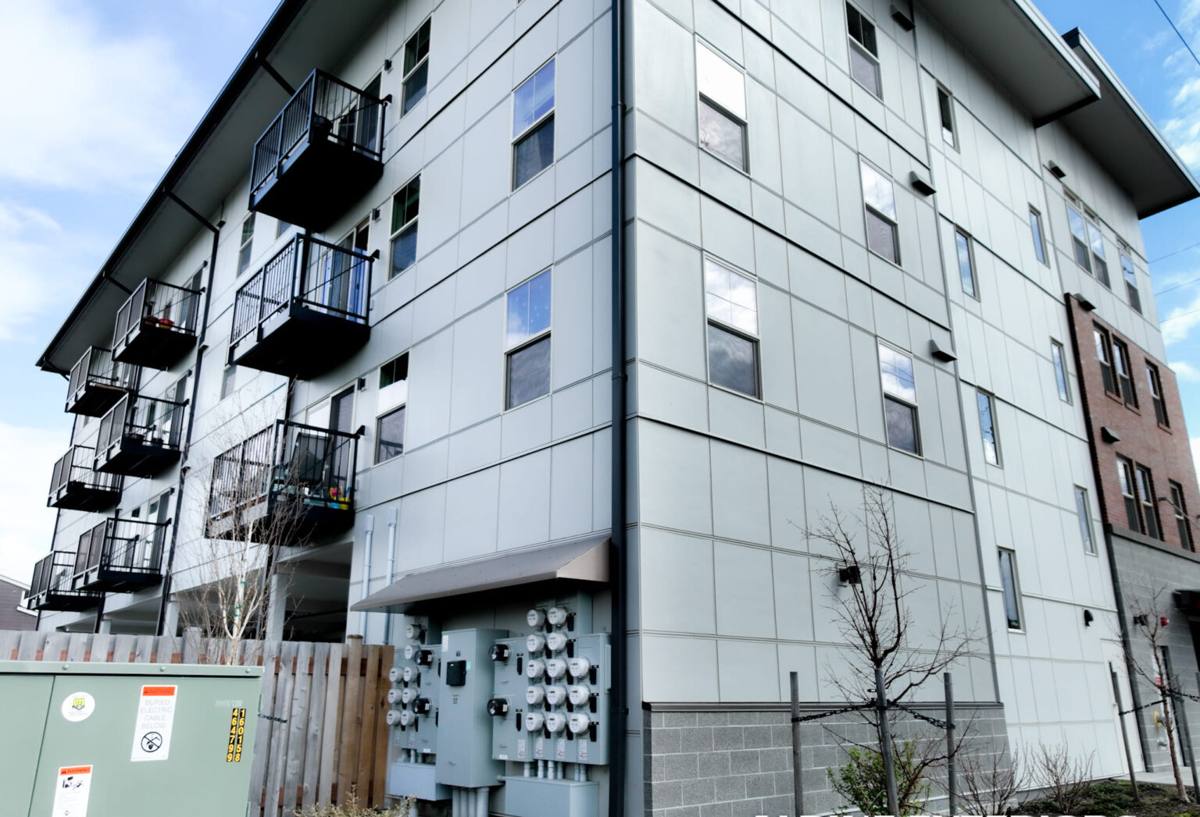
What Salt Air, Wind, and Moss Actually Do to a Roof
Salt Air
Airborne salt accelerates corrosion on exposed metal — nail heads, drip edge, flashing around chimneys and vents, and any exposed fastener on a roof accessory. Standard galvanized fasteners can start showing rust streaks years before they would inland. Once a fastener corrodes, it loses its grip and its seal, and that's exactly where water finds a way in.
Driving Rain and Wind
Open exposure means wind-driven rain doesn't just fall on a roof, it pushes sideways into laps, seams, and the underside of shingle tabs. A roof built for a sheltered inland lot — with standard nailing patterns and minimal underlayment overlap — can underperform out here even if every shingle is installed to the letter of a generic spec. This is a spot where the extra layer of protection actually earns its keep.
Moss and Shade
Skagit County's long wet season gives moss and algae months to establish themselves, especially on north-facing slopes and roof sections shaded by mature trees, which are common around March Point's more wooded lots. Moss holds moisture directly against the shingle surface, works its way under tabs as it grows, and can lift shingles enough to let wind and rain do additional damage. Left unmanaged over several seasons, it shortens the life of an otherwise sound roof.
What a Correctly Built Asphalt Shingle Roof Includes Here
A roof built for this exposure isn't a different product line — it's the same asphalt shingle roofing done with a few details that matter more on a waterfront point than they would three miles inland.
- Ice-and-water shield or a full synthetic underlayment at eaves, valleys, and around every penetration, not just the code-minimum sections
- Stainless or hot-dip galvanized fasteners in areas with direct salt exposure, instead of standard electro-galvanized nails that corrode faster
- Corrosion-resistant flashing at chimneys, skylights, and wall intersections, properly stepped and sealed rather than caulked over
- Six-nail patterns in high-wind zones instead of the four-nail minimum, which meaningfully improves wind uplift resistance
- Balanced intake and exhaust ventilation so moist air isn't trapped against the underside of the deck
- Algae-resistant (AR) shingle granules on the whole roof, not just the front-facing slope, since shaded and north-facing areas are where growth starts first
None of this is exotic. It's standard asphalt shingle roofing technique applied with the judgment that comes from having worked this specific stretch of coastline and knowing where the weak points show up first.
Signs a March Point Roof Needs Attention
Most roof failures out here give some warning before they turn into an interior leak. Worth checking a couple times a year, especially after a windstorm off the water:
- Granules collecting in gutters or at downspout outlets — a sign shingles are wearing thin
- Dark streaking or green-black patches, particularly on shaded or north-facing slopes
- Shingle tabs that look lifted, curled, or cracked, especially near ridges and edges where wind pressure is highest
- Rust streaks running down from flashing, vents, or exposed nail heads
- Moss buildup thick enough that you can't see the shingle surface underneath
- Soft spots, sagging, or visible daylight in the attic near the roof deck
- Water stains on interior ceilings, even faint ones, after a heavy rain event
Catching these early is almost always cheaper than waiting for a leak to show up inside the house.
Choosing a Shingle for This Exposure
Standard three-tab shingles, architectural (dimensional) shingles, and premium/designer shingles all hold up differently under salt air, wind, and moss pressure. Here's how they generally compare for a March Point application:
| Shingle Type | Wind Performance | Moss/Algae Resistance | Typical Lifespan |
|---|---|---|---|
| 3-Tab Asphalt | Adequate with proper nailing; more vulnerable at edges | Good with AR granules; needs regular upkeep | Shorter end of the range |
| Architectural (Dimensional) | Stronger laminate construction, better uplift resistance | Good with AR granules; heavier profile sheds debris better | Mid-range, best value for this climate |
| Premium/Designer | Highest wind ratings available in asphalt | Excellent with AR granules; often best warranty coverage | Longer end of the range |
For most March Point homes, an architectural shingle rated for high wind and paired with algae-resistant granules is the practical middle ground — strong enough for the exposure without paying premium pricing on a roof that doesn't need it. We'll walk through the honest trade-offs for your specific roof during an estimate rather than push one line because it's what we have on hand.
Our Process on This Job
Inspection First
We start on the roof and in the attic, not with a sales pitch. We're checking deck condition, existing ventilation, flashing condition, and how the current roof has actually performed against the wind and rain it's taken — that tells us more than a generic estimate ever could.
A Written Scope
You get a clear breakdown of what's being replaced, what underlayment and flashing details are included, the fastener spec, and the shingle options with real trade-offs explained — not just a single number.
Tear-Off and Deck Check
Full tear-off to the deck so we can actually see what's underneath. Any soft or water-damaged decking gets replaced before a single new shingle goes down — covering over a bad deck just hides the problem for the next roof.
Underlayment, Flashing, and Ventilation
This is where a March Point roof earns its durability — correct ice-and-water coverage, properly lapped synthetic underlayment, new flashing at every penetration, and ventilation balanced for the attic space, not just whatever was there before.
Shingle Installation
Installed to manufacturer spec with the nailing pattern appropriate for this wind exposure, and a final walk-through so you can see the finished work and ask questions before we consider the job done.
What Drives the Cost
Every roof is different, but the same handful of factors move the price up or down on most jobs out here:
| Factor | Why It Matters |
|---|---|
| Roof size and number of slopes | More square footage and more valleys/hips mean more material and labor |
| Deck condition underneath | Rotted or soft decking found at tear-off adds material and time to replace |
| Shingle tier selected | 3-tab, architectural, and premium lines carry different material costs |
| Ventilation and flashing upgrades | Bringing an older roof's ventilation up to a proper balance adds scope |
| Roof pitch and access | Steep or hard-to-access roofs take longer and require more safety setup |
| Existing layers to remove | Tearing off multiple old layers takes more labor than a single-layer tear-off |
We'd rather walk your roof and give you real numbers than throw out a broad range that doesn't mean much. Most residential asphalt shingle roof replacements land somewhere in the mid-to-upper thousands depending on these factors, but the only honest way to know your number is an on-roof estimate.
Why a Crew That Already Works March Point Matters
Roofing crews that mostly work sheltered, inland neighborhoods don't always plan for what happens when a storm rolls in off Padilla Bay with nothing to break the wind. We build in the extra fastening, flashing, and underlayment detail as standard practice out here because we've seen what happens when it's skipped — not because it's an upsell. Working regularly in Anacortes and across Skagit County also means we're familiar with local permitting requirements and the kind of building conditions common to older Skagit County homes, so there are fewer surprises once tear-off starts.
After the Roof Is On: Keeping Moss and Salt Damage in Check
A well-built roof still benefits from a little seasonal attention in this climate:
- Keep gutters clear so water isn't backing up under the lowest course of shingles
- Trim back tree limbs that overhang the roof to cut down on shade, debris, and moss growth
- Have moss growth removed gently (not pressure-washed) before it thickens and lifts shingles
- Do a visual check after major windstorms for lifted tabs or exposed fasteners
- Have flashing and fastener condition checked periodically, since salt-air corrosion is gradual and easy to miss from the ground
None of this requires a big time investment — a couple of checks a year catches most issues while they're still cheap to fix.
If your March Point roof is showing granule loss, moss, lifted shingles, or you just want an honest read on how much life it has left, we're glad to take a look. The estimate is free, there's no pressure, and you'll get a straight answer either way — just fill out the form below to get started.