 Anacortes Exterior
 Roofing Built for Cap Sante's Exposure
Cap Sante sits up on the bluff at the north end of Anacortes, with clear sightlines over the marina and Fidalgo Bay — which is exactly why the roofs up here take a beating that inland Skagit County homes don't. Wind comes off the water with nothing to slow it down, rain gets driven sideways instead of falling straight, and the shade and moisture that collect under mature trees and along north-facing slopes keep moss growing for most of the year. A shingle roof that would last two or three decades in a sheltered subdivision can start showing problems in half that time up here if it wasn't installed with this specific exposure in mind.
We've worked enough roofs in this part of Anacortes to know what actually fails first — and it's rarely the shingles themselves. It's the flashing, the ventilation, and the small installation details that either hold up against salt air and driving rain or don't.
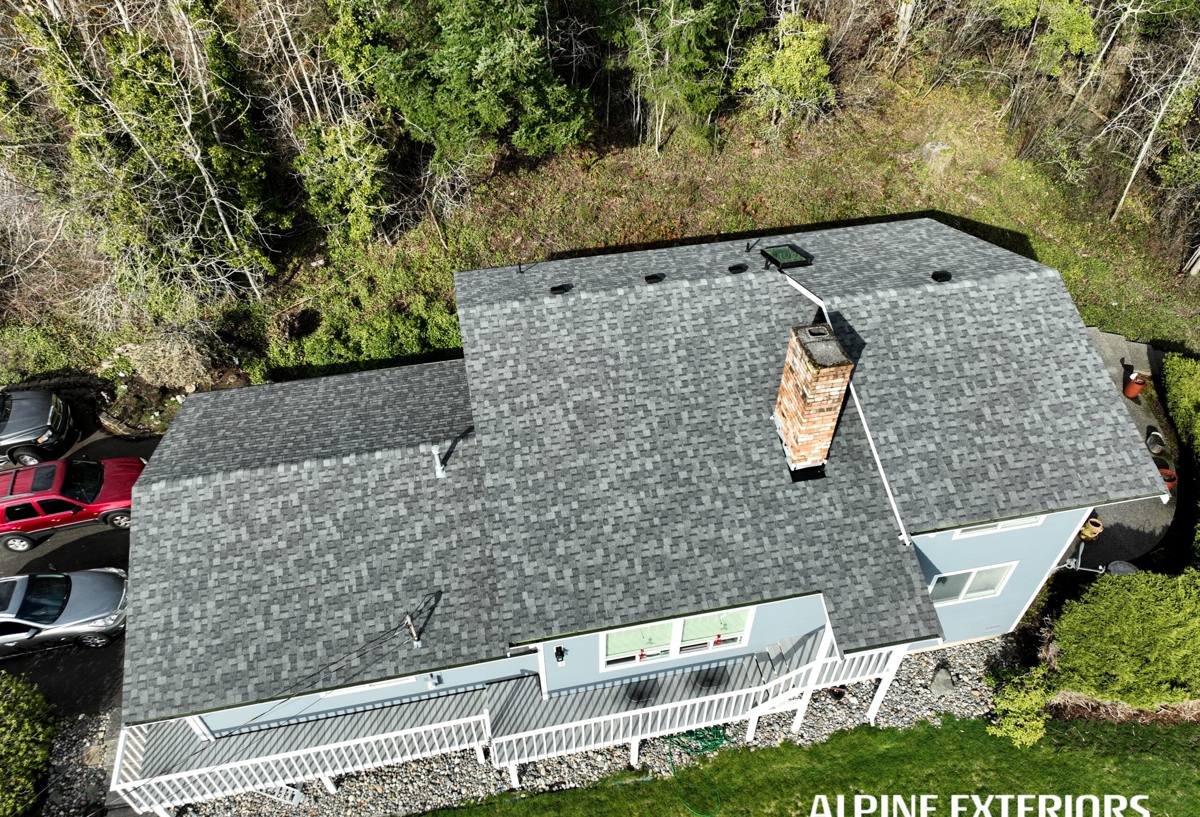
What Salt Air, Rain, and Moss Actually Do to a Shingle Roof
Salt Air and Metal Components
The metal on a roof — nails, flashing, vent boots, drip edge — is usually the first thing to show wear this close to the water. Salt-laden air accelerates corrosion, and once a nail head or a piece of flashing starts to rust, it's only a matter of time before water finds a way in around it. We spec corrosion-resistant fasteners and flashing on every Cap Sante project for this reason, not as an upsell but because standard hardware simply doesn't hold up as long this near the bay.
Wind-Driven Rain and Exposure
Rain that falls straight down is easy for a roof to shed. Rain that's being pushed sideways by wind off the water behaves differently — it can work its way up under shingle tabs, into valleys, and around flashing that would be perfectly fine in a calmer setting. Elevated, exposed lots near Cap Sante Park and the marina see more of this than roofs tucked into the trees a few miles inland, which means sealing details at valleys, eaves, and penetrations matter more here than the shingle brand does.
Moss and Shade
Skagit County's long wet season gives moss and algae plenty of time to establish, and shaded or north-facing slopes on Cap Sante properties rarely get enough sun to dry out between storms. Moss doesn't just look bad — it holds moisture against the shingle surface, lifts tabs as it grows, and works into nail holes and laps. A roof that's power-washed instead of properly treated often looks fine for a season and then comes back worse, because the granule surface gets damaged in the process.
What a Correct Asphalt Shingle Roof Involves in This Climate
Asphalt shingles are a proven, cost-effective roofing option — but "correct installation" means more in a marine climate than it does somewhere dry. The shingles are only one layer of a system, and every layer beneath them has to be right for the roof to actually perform for its full expected life.
- Synthetic underlayment rated for extended exposure, not felt paper that degrades faster under prolonged damp conditions
- Ice-and-water shield at eaves, valleys, and around penetrations — the spots where wind-driven rain is most likely to get pushed backward under the shingle line
- Step and counter-flashing at every wall intersection, chimney, and skylight, tied in correctly rather than just caulked over
- Balanced intake and exhaust ventilation, so moisture from inside the attic isn't adding to what the roof is already fighting from outside
- Corrosion-resistant fasteners, nailed in the manufacturer's high-wind pattern rather than the standard pattern
- A proper starter strip and ridge cap, which do more for wind resistance at the edges and ridge than most homeowners realize
Skip any one of these and the roof can still look fine going up — the problems just show up later, usually as a leak that's harder and more expensive to trace than it would have been to prevent.
Choosing the Right Shingle for a Cap Sante Home
All asphalt shingles are not built for the same conditions. For homes in this part of Anacortes, we generally steer people away from bare-minimum 3-tab shingles and toward architectural or algae-resistant lines, for reasons that come down to wind rating and how the roof handles moss and shade over time.
| Shingle Type | Typical Wind Rating | Algae/Moss Resistance | Best Fit |
|---|---|---|---|
| 3-tab (standard) | Lower | Limited unless AR-rated | Budget-conscious, sheltered roofs |
| Architectural (laminate) | Higher, better uplift resistance | Good with AR granules | Most Cap Sante homes — exposed, wind-prone lots |
| Premium/designer | Highest available | Best available | Waterfront or highly exposed lots, longer-term hold |
Look for shingles carrying an algae-resistant (AR) rating — copper or zinc granules blended into the surface that actively discourage the algae and moss growth this climate encourages. It's a small spec difference that makes a real difference on a shaded, damp roof slope.
Our Process, Start to Finish
- Inspection and estimate — we look at the existing roof, deck condition, ventilation, and flashing details before quoting anything, not just the shingles.
- Deck assessment — once tear-off starts, any soft or water-damaged sheathing gets identified and replaced before new material goes down.
- Tear-off and disposal — old shingles, felt, and flashing come off completely; we don't install a new roof over an old one.
- Underlayment and flashing — ice-and-water shield, synthetic underlayment, and all flashing go in first, since this is the layer that determines whether the roof actually stays watertight.
- Shingle installation — installed to the manufacturer's high-wind nailing pattern, with attention to valleys, penetrations, and edges.
- Ventilation and ridge — intake and exhaust checked and corrected if the existing setup wasn't balanced, then ridge cap installed.
- Cleanup and walkthrough — magnetic sweep for nails, full site cleanup, and a walkthrough so you know exactly what was done and what to expect going forward.
Cost Factors to Expect
We don't publish blanket pricing because every roof is different, but the factors that move the number up or down are consistent. Knowing them ahead of time makes for a more useful estimate conversation.
| Factor | Why It Matters |
|---|---|
| Roof pitch and access | Steep or hard-to-access bluff and view lots take longer and require more safety setup |
| Number of existing layers | Tear-off of multiple old layers adds labor and disposal cost |
| Deck condition | Rotted or soft sheathing found during tear-off needs replacing before shingles go down |
| Roof complexity | Valleys, dormers, chimneys, and skylights all add flashing work |
| Shingle tier | 3-tab, architectural, and premium lines carry different material costs and warranties |
| Ventilation upgrades | Adding or correcting intake/exhaust vents is worth doing during a re-roof, not after |
As a general rule, architectural shingles cost more than 3-tab up front but hold up better against wind and moss — which usually makes them the better value on an exposed Cap Sante lot over the life of the roof.
Maintenance in a Marine Climate
An asphalt shingle roof in this part of Skagit County needs more regular attention than the same roof would inland. None of it is complicated, but skipping it tends to shorten the roof's life.
- Clear moss and debris from shaded slopes before it has a chance to establish, rather than after it's already visible
- Keep gutters and downspouts clear so water isn't backing up under the eave line during heavy rain
- Trim back overhanging branches to cut down on the shade and debris that feed moss growth
- Have flashing around chimneys, skylights, and walls checked periodically — this is where leaks start, not usually the shingle field itself
- Schedule a roof inspection after major windstorms, especially if the home sits on an exposed or elevated lot
Why Hire a Crew That Already Works Cap Sante
A roofer who mostly works sheltered, inland neighborhoods can still do competent work — but they're often learning this exposure on your roof. Crews who already work Cap Sante regularly know which flashing details actually hold up against wind off the bay, how to plan access and safety setup on steep or elevated lots, and which shingle lines are worth the upgrade here versus wasted money. That familiarity shows up in fewer callbacks and a roof that performs the way it's supposed to through its full expected life, not just for the first few winters.
It also matters for something more basic: knowing the difference between a roof that needs full replacement and one that just needs targeted repair. Not every Cap Sante roof showing moss or a minor leak needs to come off completely, and an honest assessment up front should tell you which one you're dealing with.
If you're seeing moss buildup, granule loss, or signs of a leak on a Cap Sante roof — or it's simply been a couple decades since the last one went on — we're happy to take a look and give you a straightforward, no-pressure estimate. Use the form below to get started.