 Anacortes Exterior
 West Anacortes Roofs Take a Different Kind of Beating
West Anacortes sits close to the water, and that proximity shapes how a roof ages here. Homes on this side of Fidalgo Island catch more direct wind off the surrounding Salish Sea waters than roofs further inland in Skagit County. Salt-laden air, driving rain that comes in sideways during winter storms, and a moss season that can run most of the year all add up to roofs that wear differently than a roof in a drier, more sheltered climate. A repair that holds up fine in Mount Vernon or Burlington isn't automatically the right fix for a house a few blocks from the water in West Anacortes.
We work on roofs in this neighborhood regularly, and the patterns repeat: fastener corrosion near the coastline, moss buildup on shaded north- and west-facing slopes, and flashing failures around chimneys and vents that took on more wind-driven water than they were built to handle. A correct repair here accounts for all of that, not just the leak that happens to be visible today. Getting it right the first time matters more here than in a milder inland spot, because a rushed fix on a coastal roof tends to fail again faster than the same shortcut would on a sheltered lot.
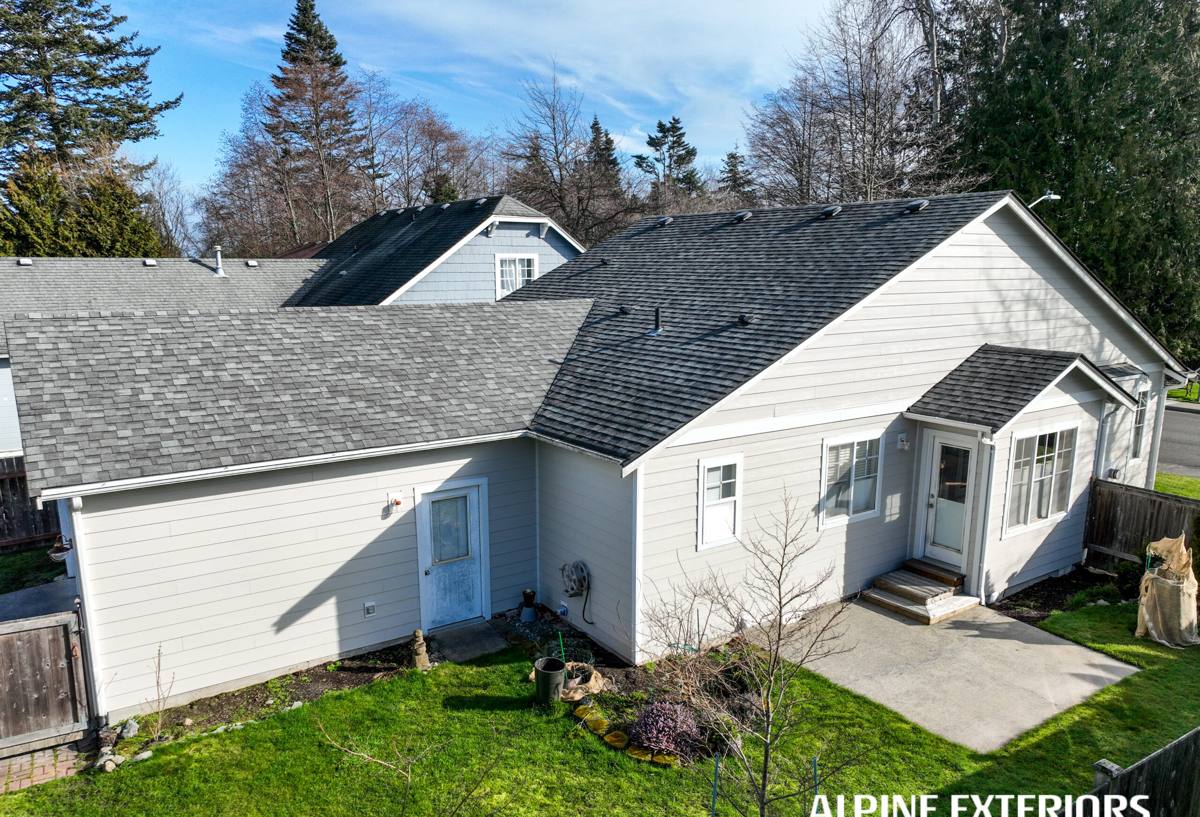
How the Local Climate Damages Roofs
Salt Air and Metal Fatigue
Airborne salt from the surrounding water accelerates corrosion on anything metal on a roof — nails, flashing, vent caps, gutter hangers, and the screws that secure ridge and hip caps. On homes close to the water, galvanized fasteners and flashing corrode noticeably faster than the same materials would last twenty or thirty miles inland. Once a fastener starts to corrode, it loses grip and can back out or split the shingle around it, which opens a path for water even though the roofing material itself may still have years of life left. This is why the fastener and flashing choices we make on a coastal repair aren't just a matter of preference — they directly affect how long the fix lasts.
Driving Rain and Wind-Driven Water
Winter storms in this part of Skagit County frequently bring rain in sideways, not straight down. Wind-driven rain finds weaknesses that a gentle vertical rain never would — under-lapped shingle edges, marginal flashing laps, and small gaps around penetrations that would stay dry in calmer weather. West Anacortes homes with open exposure toward the water tend to take this kind of moisture more directly, which is why flashing detail and shingle lap work matter more here than on a sheltered inland lot.
Moss, Shade, and Slow Roof Damage
Fidalgo Island's tree cover and the persistent damp of a Pacific Northwest winter make moss and algae a near-constant issue on roofs that don't get much direct sun. Moss holds moisture against the roofing material long after the rest of the roof has dried out, and as it grows it lifts shingle edges and works its way under laps. Left alone, a mossy patch that starts as a cosmetic issue becomes a slow leak. It's one of the most common reasons we get called to a home that, by the owner's account, "never had problems before."
What a Correct Roof Repair Actually Involves
A roof repair done right is more than sealing the spot where water is showing up inside the house. Interior water stains often appear several feet from the actual entry point, since water travels along the underlayment or framing before it drips. A proper repair starts with tracing the leak to its real source, not just treating the symptom.
Depending on what we find, a correct repair can include:
- Removing and replacing damaged or missing shingles, not just caulking over them
- Re-flashing around chimneys, skylights, vents, and other roof penetrations where the original flashing has corroded or pulled loose
- Checking and repairing underlayment in the affected section, since torn or aged underlayment will keep leaking even after the visible shingle damage is fixed
- Clearing moss and treating the affected area so the repair isn't undone within a season or two
- Confirming the decking underneath hasn't gone soft from prolonged moisture before closing the repair back up
- Choosing fasteners and flashing suited to a marine environment rather than whatever is standard inland
Skipping any of these steps to save time usually just delays the next service call. We'd rather tell a homeowner honestly what a section of roof needs than patch it in a way that looks fine for one summer and fails again by the following winter.
Our Repair Process, Start to Finish
Inspection and Honest Assessment
We start by getting on the roof, not just looking at it from the ground. We check the shingles, flashing, fasteners, and decking in the area of concern, and we look over the rest of the roof too — a repair estimate should tell you if other issues are developing, not just describe the one that prompted the call.
A Clear Explanation Before Any Work Starts
Before we do anything, we walk through what we found, what's causing the problem, and what it will take to fix it correctly. If a section is beyond a reasonable repair, we'll say so plainly rather than patch something that should be replaced instead.
The Repair Itself
We match materials as closely as possible to what's already on the roof, use fasteners and flashing suited to a marine environment, and rebuild the affected section so it sheds water the way the rest of the roof does. Where moss has been part of the problem, we clear it from the work area and the surrounding roof so the new repair isn't immediately compromised by the same growth that caused the original damage.
Final Check
Once the repair is done, we check the surrounding area for any other soft spots, loose flashing, or early moss growth so a homeowner isn't dealing with a second issue a few months later.
Repair or Replace? Cost Factors to Weigh
Not every roof problem calls for full replacement, but not every leak should just be patched either. These are the main factors that push a decision one way or the other:
| Factor | Favors Repair | Favors Replacement |
|---|---|---|
| Roof age | Well within expected lifespan | At or past expected service life |
| Extent of damage | Isolated to one section or penetration | Spread across multiple slopes |
| Decking condition | Solid, no soft spots | Soft, rotted, or delaminated in multiple areas |
| Moss and algae history | First occurrence, addressed early | Long-term, recurring, widespread growth |
| Fastener and flashing condition | Localized corrosion | Corrosion throughout the roof system |
We'll never push a full replacement when a repair will genuinely hold up, and we won't recommend a repair on a roof that's already showing system-wide wear just to keep the estimate smaller. The goal is telling you honestly which category your roof falls into, with the reasoning laid out so the decision makes sense to you, not just to us.
Signs You Need a Roof Repair Now
Some roof problems can wait for a scheduled inspection. Others shouldn't wait through another West Anacortes storm season. Call sooner rather than later if you notice:
- Water stains on interior ceilings or walls, especially after a windy rainstorm
- Moss growth thicker than a light green film, particularly on shaded slopes
- Shingles that are cracked, curling, or missing after a windstorm
- Rust streaks below metal flashing, vent caps, or fasteners
- Granules collecting in gutters or at downspout outlets
- Daylight visible through the roof deck from inside the attic
- Soft or spongy spots underfoot if you're up on the roof for another reason, like gutter cleaning
Any one of these on its own may be minor. Several together usually mean the roof needs attention before the next storm system moves through.
Ongoing Maintenance for West Anacortes Homes
Because of the moss and salt air factors specific to this area, a West Anacortes roof benefits from more frequent attention than a roof in a drier, more sheltered part of Skagit County. Keeping gutters clear so water doesn't back up under the shingle edge, knocking moss back on shaded slopes before it gets established, and having flashing and fasteners checked periodically all extend the life of both a repair and the roof as a whole. A reasonable rhythm for this area is a check before fall storm season sets in and another once moss growth from the wet months has had a chance to show itself in spring. None of this needs to be elaborate — it's mostly about not letting small, normal wear turn into a bigger repair because it went unnoticed for a few seasons.
Why Hiring a Crew That Already Works West Anacortes Matters
A roofer who mostly works inland doesn't necessarily think about salt air corrosion or wind-driven rain the same way a crew that works this specific stretch of Fidalgo Island does. We know which fastener and flashing choices hold up near the water, which slopes on a typical West Anacortes home tend to hold moss longest, and how local storm patterns tend to expose weak points in a repair. That familiarity means fewer surprises, a more accurate first estimate, and a repair built for the conditions your roof actually faces — not just a generic fix pulled from a general contractor's standard playbook.
If you're dealing with a leak, storm damage, or a roof that's showing its age, we're happy to take a look and give you a straightforward assessment — no pressure, no upsell, just an honest read on what your roof needs. Request a free estimate using the form below and we'll get back to you to schedule a time to come out.