 Anacortes Exterior
 Why Siding Damage in Sedro-Woolley Doesn't Look Like a Textbook Problem
Sedro-Woolley sits inland from the water, tucked against the Skagit River valley with the Cascade foothills rising just to the east. That geography changes how siding fails compared to homes right on the coast, but it doesn't make the failures any gentler. Homes here deal with long stretches of damp, overcast weather, driving rain that comes sideways during winter storms, and moisture-laden air that moves inland off the Salish Sea and settles into the valley. Add heavy tree cover on many lots and you get shaded, slow-drying wall sections where moss and algae get a real foothold for months at a time.
That combination — persistent moisture, limited sun exposure on north- and east-facing walls, and a moss season that can stretch from fall through spring — is exactly the kind of environment that finds every weak point in a siding system. A nail popped an inch too shallow, a caulk joint that's started to crack, a corner where flashing was never installed correctly: in a drier climate those might sit for years without consequence. In Sedro-Woolley, they turn into rot, delamination, or trapped moisture behind the cladding much faster.
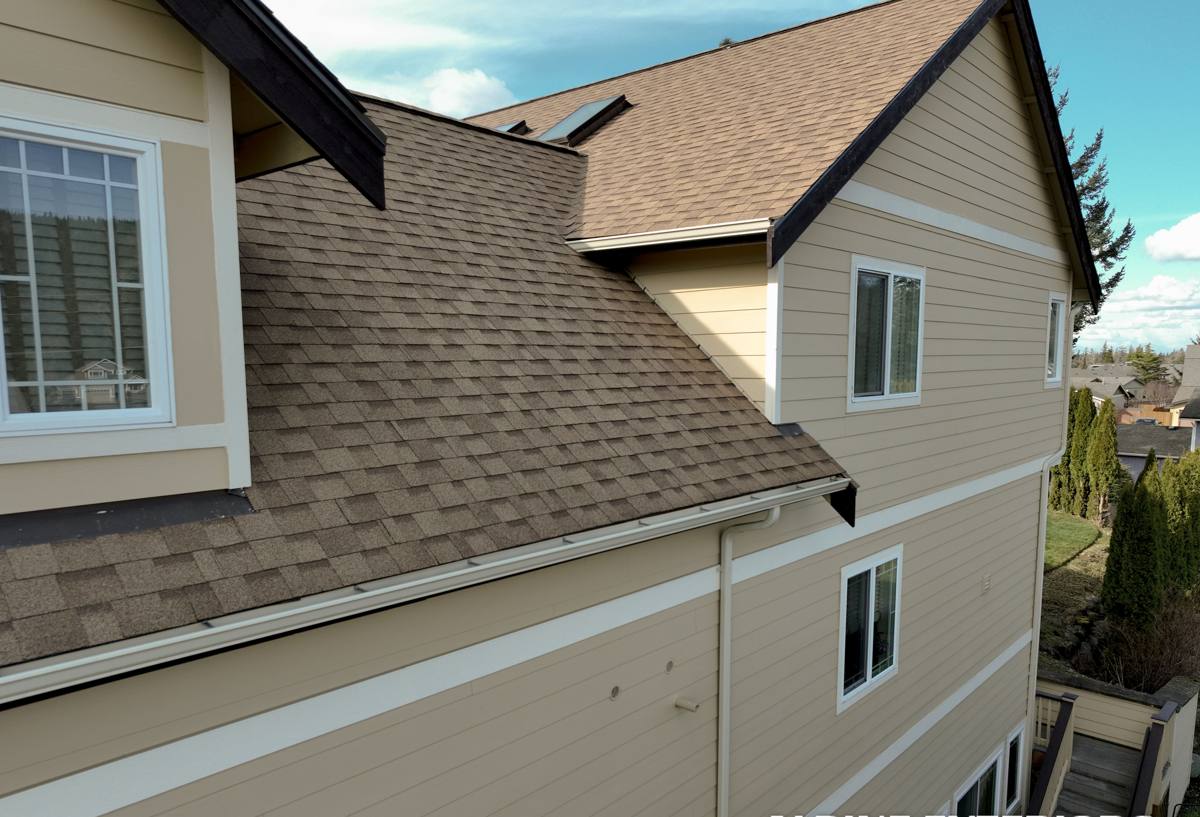
The Signs That Mean You Need Repair, Not Just a Repaint
A lot of siding problems get treated like a cosmetic issue when they're actually a moisture problem wearing a cosmetic disguise. Here's what we look for, and what each sign usually means underneath the surface:
- Soft or spongy spots when you press on a wall — almost always trapped moisture and early rot in the substrate, not just surface wear.
- Peeling or bubbling paint in the same spot repeatedly — a sign moisture is getting behind the siding and pushing the finish off from the inside, not a paint quality issue.
- Dark streaking or persistent moss/algae growth in shaded corners — indicates the area isn't drying out between rain events, which accelerates every other kind of damage.
- Visible gaps, warping, or buckled boards — often a sign of moisture-driven swelling or a failed fastening pattern.
- Cracked or missing caulk at joints, corners, and trim — the entry point for water intrusion, even when the siding field itself looks fine.
- Soft trim or fascia near the siding line — a strong indicator that water has already been traveling behind the cladding for a while.
None of these are reasons to panic, but all of them are reasons to get a real inspection rather than a caulk-and-paint patch job. Covering up a moisture problem instead of solving it just moves the damage a few feet over and buys you a bigger repair bill in a year or two.
What a Correct Siding Repair Actually Involves
Diagnosis Before Demolition
The first step isn't pulling boards — it's figuring out why the damage happened in the first place. If we replace a rotted section without finding and fixing the source (a failed flashing detail, a clogged gutter dumping water onto a wall, a grade issue pushing splashback onto the lower courses), the new material fails the same way in a similar timeframe. A repair that doesn't address the cause isn't really a repair.
Checking What's Behind the Siding
Once boards come off, we look at the water-resistive barrier, the flashing at windows, doors, and penetrations, and the sheathing underneath. In a climate like Sedro-Woolley's, it's common to find that the visible siding damage is smaller than what's happening behind it. Repairing the surface without checking the barrier and sheathing is how homeowners end up paying for the same repair twice.
Matching Material and Finish
Whatever we install in the repaired section needs to match the surrounding siding in profile, exposure, and finish — otherwise you end up with an obvious patch instead of a repair. This is more straightforward with a factory-finished product than with field-painted material, since a factory finish holds its color consistently over time and a fresh section is more likely to match an older one without an immediate repaint of the whole wall.
Fastening and Sealing to Spec
Nail placement, gapping, and caulking all matter as much on a repair as they do on a full install. A repair done with the wrong fastener spacing or without proper sealant at joints just recreates the conditions that caused the original failure.
Repair or Replace? How We Help You Make That Call
Not every damaged section means a full re-side, and not every "small" repair should be treated as small. The right call depends on a handful of factors, and we walk through them with you honestly before recommending either path.
| Factor | Points Toward Repair | Points Toward Replacement |
|---|---|---|
| Extent of damage | Isolated to one or two sections | Present on multiple walls or elevations |
| Age of existing siding | Younger system, otherwise sound | Near or past its expected service life |
| Underlying moisture damage | Barrier and sheathing intact | Sheathing rot or barrier failure found |
| Material match | Compatible material still available | Discontinued profile, color, or product line |
| Root cause | Fixable with flashing/drainage correction | Systemic issue affecting the whole envelope |
When damage is contained and the cause is identifiable and fixable, a proper repair is the honest recommendation — there's no reason to sell a homeowner a full re-side they don't need. When the damage points to a system-wide problem, we'll say so plainly, along with why.
Our Process for a Sedro-Woolley Siding Repair Call
- Inspection and diagnosis — we look at the damaged area and the surrounding wall assembly, not just the spot you called about.
- Root-cause identification — flashing, drainage, grading, or fastening issues get flagged before any repair work starts.
- Written scope and honest recommendation — repair or replace, with the reasoning explained in plain terms.
- Correct removal — damaged material and any compromised barrier or sheathing removed carefully, without disturbing sound adjacent areas.
- Rebuild to spec — proper barrier, flashing, fastening, and sealing before new siding goes on.
- Finish and match — new material installed to blend with the existing wall as closely as the product allows.
Why We Repair With James Hardie — and Won't Patch a Failing System With Something Else
We install James Hardie fiber cement siding exclusively. We don't install LP SmartSide, vinyl, Cemplank, Allura, primed spruce, or cedar, and that standard applies to repairs the same way it applies to new installs. If a home has one of those other products failing and needs a repair, we'll tell you honestly what we're seeing and what your options are — but we won't represent patch work on a product we don't stand behind as a long-term fix.
James Hardie's fiber cement is non-combustible, holds up to sustained moisture exposure far better than wood-based or wood-composite sidings, and comes with a factory ColorPlus finish that resists fading and doesn't need repainting on the same schedule as field-applied paint. Hardie also engineers specific product lines (their HZ5 designation, for example) for regions with heavier moisture exposure — which matters in a climate where a siding system spends a lot of the year wet. When we do a Hardie repair, we're matching into a system with a strong, transferable warranty and a known, consistent installation spec, which makes the repair itself more reliable and easier to blend in.
Why It Matters That We Already Work in Sedro-Woolley
A repair crew that's worked on homes throughout Skagit County knows what driving rain off a winter storm does to an unprotected south wall, how moss builds up on shaded siding through a long wet season, and which fastening and flashing shortcuts show up again and again as the cause of failures in this specific climate. That local pattern recognition is what separates a repair that actually solves the problem from one that just replaces the boards and waits for the same issue to return. It also means we're not guessing at material availability or driving distance — we already know the area and can turn around a diagnosis and honest scope quickly.
Before You Call Anyone: A Quick Homeowner Checklist
- Walk your home's exterior and press gently on any area that looks discolored, stained, or swollen — note anywhere that feels soft.
- Check corners, window trim, and door trim for cracked or missing caulk.
- Look at shaded, north-facing walls for heavy moss or algae buildup.
- Check gutters and downspouts for clogs or misdirected water that could be soaking a nearby wall.
- Note whether any interior walls near suspect exterior areas show staining, soft drywall, or musty smell.
- Take photos of anything concerning before it's covered by more rain or growth — it helps with an accurate first assessment.
What Happens If a Repair Gets Put Off
Siding problems in a climate like this don't stay the same size. A small area of trapped moisture behind a wall section keeps working through the wet months even when nothing looks worse from the outside. By the time damage becomes visible again, it's often larger than the original issue — more sheathing affected, more of the water-resistive barrier compromised, sometimes framing involved. Addressing a repair while it's still contained is almost always less disruptive and less costly than waiting for it to spread through another rainy season.
If you're noticing any of the signs above on a Sedro-Woolley home, we're happy to take a look and give you a straight answer — repair, replace, or nothing to worry about yet. Reach out for a free, no-pressure estimate using the form below.