 Anacortes Exterior
 Roofing in Old Town Anacortes Isn't Like Roofing Inland
Old Town Anacortes sits close to the water, and that changes what a roof has to deal with day in and day out. Homes here catch salt-laden air off Fidalgo Bay and the surrounding waterways, take on driving rain that comes in sideways during winter storms, and sit under enough tree cover and marine moisture to grow moss on nearly any roof surface that isn't actively shedding it. A roof spec'd for a dry inland neighborhood in Skagit County doesn't hold up the same way here. When we replace a roof in this part of town, we're building for those specific conditions, not just installing a generic package.
A lot of the older homes in Old Town were built decades ago, and many have already had at least one re-roof — sometimes more than one, sometimes done in a hurry or by whoever was cheapest at the time. That history matters. It affects what we find once the old roofing comes off, and it shapes the decisions we make about decking, ventilation, and underlayment before a single shingle or panel goes down.
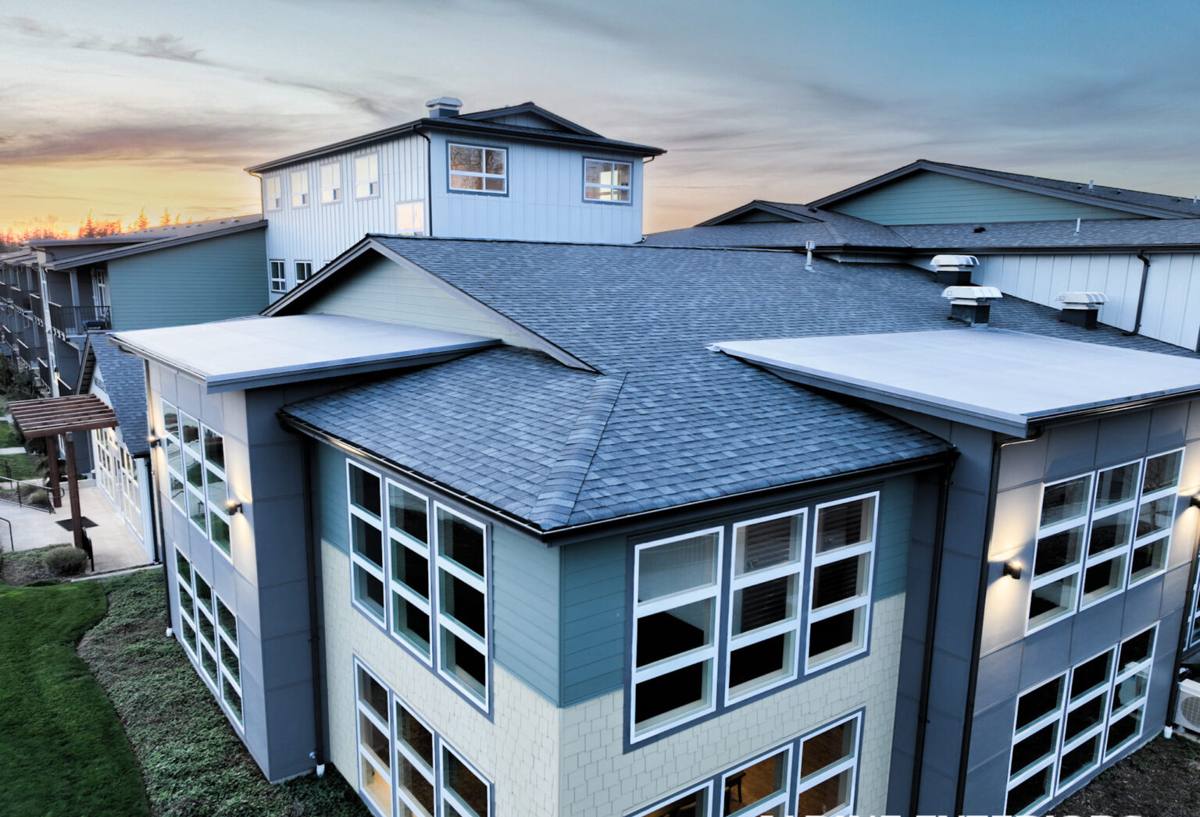
What Salt Air, Rain, and Moss Actually Do to a Roof
Salt Air
Airborne salt accelerates corrosion on exposed metal — flashing, fasteners, vent stacks, and any exposed hardware. Over years, that corrosion can compromise the very details that are supposed to keep water out at roof penetrations and edges. It's a slow process, but it's constant here in a way it simply isn't for homes further inland.
Driving Rain
Anacortes gets weather that doesn't just fall straight down — wind-driven rain pushes water sideways and upward under shingle edges, around vents, and into any gap in flashing that wouldn't be a problem in calmer conditions. This is why lap details, fastener placement, and underlayment coverage matter more here than a basic installation checklist would suggest.
Moss and Moisture
Shade, humidity, and a long damp season are ideal conditions for moss growth on roofing. Moss holds moisture against the roof surface, works its way under shingle tabs, and can lift edges over time, giving water a path in. A roof with poor airflow underneath ages faster in these conditions, developing rot in the decking long before the visible roofing material looks worn out.
Signs an Old Town Anacortes Roof Needs Replacing, Not Just Patching
- Moss growth that returns quickly after cleaning, especially in shaded north-facing sections
- Granule loss showing bare, shiny patches on asphalt shingles
- Curling, cracking, or missing shingles, particularly on wind-exposed slopes
- Soft or spongy spots when walking the roof, indicating decking damage underneath
- Rusted or corroded flashing around chimneys, vents, and roof-to-wall transitions
- Daylight visible through the roof deck from inside the attic
- Water stains on interior ceilings or in the attic that reappear after rain
- A roof approaching or past its expected service life for its material type
One or two of these on their own might mean a repair is enough. Several together, especially combined with a roof that's already had prior patch work, usually means it's more cost-effective to replace than to keep chasing leaks.
What a Correct Installation Looks Like Here
Tear-Off and Deck Inspection
We remove the old roofing down to the deck rather than layering over it. That's the only way to actually see what condition the plywood or plank decking is in. In Old Town, where many homes have older decking, finding some soft or delaminated sections during tear-off isn't unusual — those get replaced before anything new goes down, because new roofing over compromised decking just hides the problem and shortens its life.
Underlayment Built for Wind-Driven Rain
Given how often rain here comes in at an angle, we pay close attention to underlayment coverage and lap direction, with extra protection at eaves, valleys, and any low-slope transitions where water is most likely to be pushed backward under the roofing material.
Flashing That Accounts for Salt Exposure
Flashing at chimneys, sidewalls, vents, and roof valleys is where most leaks actually start — not in the open field of the roof. We use flashing materials and fastener choices suited to a marine-air environment rather than defaulting to whatever is cheapest, since corrosion-prone hardware in this location fails faster and takes the surrounding roofing with it.
Ventilation That Discourages Moss and Rot
Proper intake and exhaust ventilation keeps the underside of the roof deck drier and less hospitable to the moss, algae, and rot that thrive in this climate. A roof that breathes correctly also helps the roofing material itself last closer to its full rated lifespan instead of degrading early from trapped moisture.
Final Details
Drip edge, ridge caps, and fastener patterns get finished to spec, not shortcuts. These are small details, but on a roof that's going to face decades of Anacortes weather, they're the difference between a roof that performs and one that needs attention again in a few years.
Roofing Material Options for Old Town Homes
| Material | How It Handles This Climate | Maintenance Considerations |
|---|---|---|
| Architectural Asphalt Shingles | Solid performance with proper ventilation and moss-resistant granules; widely used and cost-effective | Periodic moss and debris removal recommended, especially on shaded slopes |
| Metal Roofing | Sheds moss more effectively and handles driving rain well when seams and fasteners are properly installed | Requires corrosion-resistant fasteners and coatings given salt air exposure |
| Synthetic/Composite Roofing | Resists moisture absorption and moss buildup better than some natural materials | Installation quality matters more than with traditional materials — sensitive to workmanship |
| Cedar Shake | Traditional look, but retains moisture in a damp marine climate more than other options | Higher maintenance burden here; moss and rot risk is elevated without diligent upkeep |
We'll walk through which option fits your home, your roofline, and your budget honestly — including the trade-offs, not just the upside. There's no single "best" material for every house in Old Town; it depends on slope, shade exposure, and how much ongoing maintenance you want to take on.
Our Process for Old Town Anacortes Roof Replacements
- On-site assessment — we inspect the current roof, attic ventilation, and any visible problem areas before quoting anything
- Written estimate — clear scope of work, material options, and pricing, with no vague allowances
- Scheduling around weather — we plan installation windows with Anacortes rain patterns in mind to protect your home during the process
- Tear-off and deck inspection — old roofing removed, decking checked and repaired as needed
- Installation — underlayment, flashing, ventilation, and roofing material installed to spec for marine-air conditions
- Final walkthrough — we review the completed work with you and answer any questions before we consider the job done
Why a Local Crew Matters for This Job
Roofing crews that work Old Town Anacortes regularly already know which streets sit closest to the water, which lots hold the most shade and moss pressure, and which older homes tend to have decking issues under the surface. That familiarity isn't just talk — it shows up in fewer surprises during tear-off and fewer callbacks after the job is done. A crew that only occasionally works this part of Skagit County is more likely to spec a roof the same way they would anywhere else, without accounting for what actually wears roofs out here.
Being local also means we're not disappearing after the invoice is paid. If a question comes up six months or two years down the line, we're still in Anacortes, reachable, and familiar with the work we did on your house.
What Affects the Cost
- Roof size and number of slopes or facets
- Pitch — steeper roofs take longer and require more safety setup
- Current decking condition and how much replacement it needs
- Material choice, from standard asphalt shingles up through metal or composite options
- Number and complexity of penetrations — chimneys, skylights, vents
- Ventilation upgrades needed to bring an older roof system up to a proper standard
- Accessibility of the property for equipment and material staging
We don't give ballpark numbers over the phone without seeing the roof — there's too much variation between houses, even within the same neighborhood, for that to be honest. What we can tell you is that a properly installed roof, built for this specific climate, generally costs less over its lifetime than a cheaper installation that needs early repairs or a premature replacement.
Ready for a Straight Answer on Your Roof?
If you're dealing with moss that keeps coming back, a roof that's past its expected life, or you just want an honest opinion on whether repair or replacement makes sense for your Old Town Anacortes home, we're glad to take a look. The estimate is free, there's no pressure, and you'll get a clear explanation of what we see and what we'd recommend — use the form below to get started.