 Anacortes Exterior
 Building New in March Point Means Building for the Weather From Day One
March Point sits out on the water side of Fidalgo Bay, which means new construction here deals with a different weather load than a home going up further inland in Skagit County. Salt-laden air off the bay, driving rain that comes in sideways during winter storms, and a moss season that runs longer than most homeowners expect all put steady pressure on a building envelope. Windows are one of the biggest openings in that envelope, and how they're installed during new construction sets the tone for the next 20-30 years of performance.
Unlike a retrofit or replacement job, new-construction window installation gives us access to the framing, sheathing, and weather-resistive barrier before anything is closed in. That's an advantage — it means the flashing and water management details can be done right the first time, instead of worked around later. For a March Point build, that matters more than it would somewhere drier.
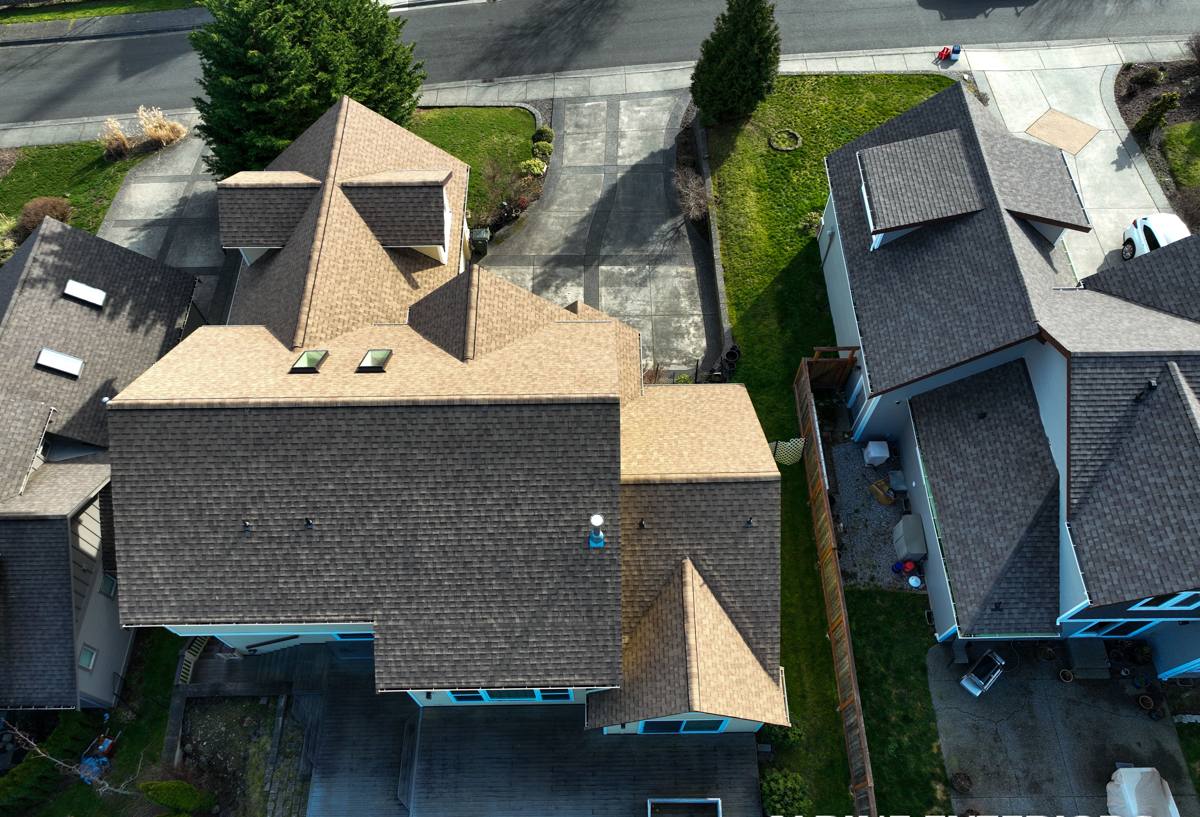
What March Point's Climate Actually Does to Windows and Framing
Salt Air
Homes close to Fidalgo Bay and the Salish Sea get a steady low-level exposure to salt in the air. Over time, salt accelerates corrosion on unprotected fasteners, hardware, and some window frame components. It's not dramatic — it's cumulative. The fix isn't panic, it's material selection: corrosion-resistant fasteners, hardware rated for coastal exposure, and frame materials that don't rely on paint alone to stay protected.
Driving Rain
Anacortes gets rain that doesn't just fall straight down — wind off the water pushes it sideways into wall assemblies, especially on west and south-facing elevations. A window opening is only as good as its weakest flashing detail. Water that gets behind the exterior cladding and finds its way to sheathing or framing can sit there for months before anyone notices, because it's hidden.
Moss and Sustained Moisture
Skagit County's moss season is long, and moss thrives anywhere moisture lingers — including on sills, trim, and any horizontal surface near a window opening that doesn't shed water cleanly. Moss holds moisture against wood and painted surfaces far longer than open rain exposure does, which speeds up rot and finish failure if the details around the opening aren't sloped and sealed correctly.
What a Correct New-Construction Window Installation Involves
New-construction installation isn't just setting a window in a rough opening and running a bead of caulk around it. Done right, it's a layered water-management system:
- Weather-resistive barrier lapped correctly around the rough opening before the window ever goes in
- Sill pan flashing that directs any water that gets past the window back out, not into the wall cavity
- Window flanges integrated into the WRB in the correct shingle-lap order — side flanges, then head flange, over the sill pan
- Head flashing above the window to break the path of water running down the wall
- Backer rod and compatible sealant at the interior and exterior, sized and placed correctly — not just caulk smeared over gaps
- Proper shimming and fastening so the window operates correctly and doesn't rack or bind over time
- Insulation in the gap between the rough opening and the window frame, done without over-compressing or leaving voids
Skip or rush any one of these steps and the window itself can be excellent quality and still leak, rot the framing around it, or fail early. This is why new-construction window work is as much about sequencing and detailing as it is about the product going in.
Why New Construction Is Different From a Replacement Job
In a replacement, we're often working with an existing wall assembly and matching to what's there, sometimes with limited access to the framing behind it. In new construction on a March Point lot, we get to build the water management system from scratch — full access to sheathing, full control over flashing sequence, and the chance to get every layer right before siding closes it all in. It's a better outcome for the homeowner, but only if the crew doing the install understands coastal detailing and doesn't treat it like a standard inland build.
Choosing the Right Window for a March Point Build
Product choice matters less than installation quality, but it's still worth getting right. For coastal Skagit County builds, we generally steer homeowners toward:
| Factor | What to Look For | Why It Matters Here |
|---|---|---|
| Frame material | Corrosion-resistant hardware, coastal-rated finishes | Salt air accelerates hardware and fastener corrosion over time |
| Cladding/finish | Finishes rated for high-UV, high-moisture exposure | Long wet seasons plus summer sun stress finishes more than a dry climate would |
| Glazing | Dual or triple-pane with a warm-edge spacer | Reduces condensation risk, which matters in a consistently humid marine climate |
| Drainage design | Frames with built-in weep paths | Any water that gets into the frame track needs a clear way back out |
| Warranty structure | Coverage that includes seal failure and hardware, not just glass breakage | Coastal exposure is exactly the condition seal and hardware warranties are meant to cover |
We install a range of manufacturer lines and don't push a single brand as the only answer — the right choice depends on the home's design, budget, and how exposed the lot is to wind and salt spray off the bay. What we won't do is compromise on flashing and installation sequence to save time, regardless of which window brand is going in. That's where coastal builds actually fail.
Our Process for a March Point New-Construction Window Job
1. Plan Review and Site Assessment
We look at the build plans, the lot's orientation relative to the bay, and which elevations will take the heaviest wind-driven rain. This shapes flashing details and, in some cases, window placement recommendations before framing is even finished.
2. Rough Opening Verification
Before any window goes in, we confirm rough openings are square, correctly sized, and that the WRB is properly installed and lapped. Catching a framing issue here is far cheaper than catching it after siding is on.
3. Flashing and Sill Pan Installation
This is the step that determines whether the window stays dry for the life of the building. We install sill pans and flashing in the correct order, every time, on every opening — not just the ones facing the worst weather.
4. Window Setting and Sealing
Windows are set square, shimmed correctly, and fastened per manufacturer spec so the warranty stays intact. Sealant goes where it belongs — not as a substitute for proper flashing, but as the final layer of a system that's already doing the real work.
5. Final Inspection
Before we consider the job done, every opening gets checked for proper operation, air sealing, and flashing integration with the WRB, so the siding crew is closing in a wall assembly that's actually ready for Anacortes weather.
Why It Matters to Hire a Crew That Already Works March Point
A contractor who mostly works drier inland projects can still install a window correctly on paper and still get the coastal details wrong — because the failure modes here are different. A crew that regularly works Anacortes and the surrounding Skagit County coastline knows which elevations take the worst of the wind-driven rain, how much moss buildup to expect on sills and trim, and which hardware and fastener choices hold up against salt exposure instead of corroding out in a few years. That local pattern recognition doesn't show up in a spec sheet — it shows up in the details you don't see once the siding's on.
Signs of a Poor Window Installation to Watch For Later
Even on a new build, it's worth knowing what a bad installation eventually looks like, so any issues get caught early:
- Staining or discoloration on interior drywall below or beside a window
- Soft or spongy trim or sill material when pressed
- Visible moss or persistent green growth building up on horizontal window trim
- Windows that stick, bind, or won't latch fully a year or two after move-in
- Drafts at the window perimeter during winter wind events
- Condensation forming between panes, which signals a seal failure
None of these should show up in the first few years on a correctly installed new-construction window. If they do, it's almost always a flashing or sealing issue, not a product defect.
Get an Estimate for Your March Point Build
If you're framing a new home in March Point or planning one, we're glad to walk the site, talk through window placement and flashing strategy for your specific lot, and put together a straightforward, no-pressure estimate. Reach out through the form below to get started.