 Anacortes Exterior
 Siding Built for the Realities of Fidalgo Island
Homes on Fidalgo Island face a combination of weather stress that most inland siding contractors never have to think about. You've got salt-laden air coming off the surrounding waterways, wind-driven rain that hits walls sideways during winter storms, and long stretches of overcast, damp weather that keep exterior surfaces wet far longer than they'd stay wet elsewhere in Skagit County. Add in tree cover and shaded north-facing walls, and you get conditions where moss and algae take hold fast and don't let go.
Generic siding installation advice doesn't account for any of that. A siding job that would hold up fine in a dry inland climate can fail within a few years on Fidalgo Island if it's the wrong material, or installed without the right detailing. This page is specifically about what siding installation needs to look like on this island — not siding in general.
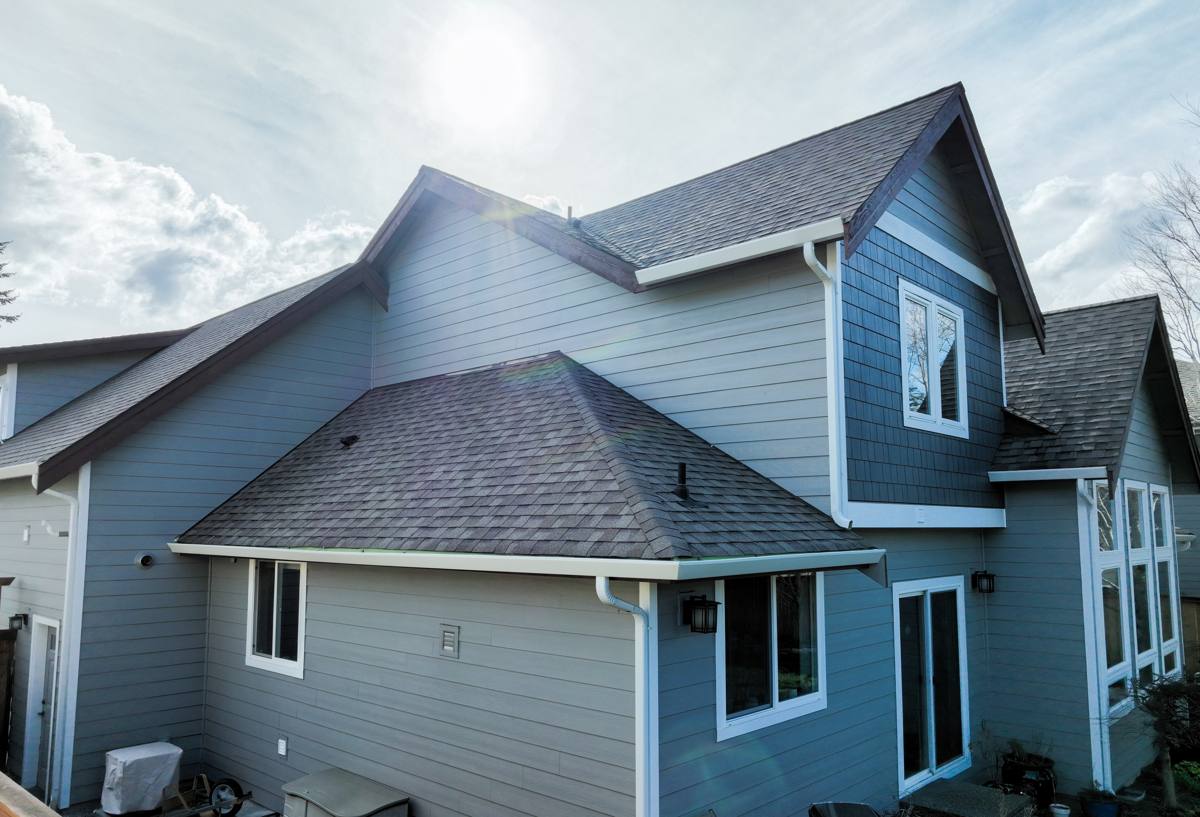
What This Climate Actually Does to Siding
Salt Air and Corrosion
Airborne salt doesn't just affect boats and metal railings. It accelerates the breakdown of fasteners, trim caps, and any exposed metal flashing on a home's exterior. Cheap or mismatched fasteners corrode faster here than almost anywhere else in the county, and once a fastener starts failing, the siding panel it's holding starts moving — which opens the door to water intrusion.
Wind-Driven Rain
Anacortes and the surrounding island get their share of storms where rain isn't falling straight down — it's being pushed sideways into walls, soffits, and any gap in the building envelope. Siding that relies on face-nailing alone, or that has loose-fitting laps and butt joints, will let water behind the surface over time. Once water gets behind siding on a wall that doesn't dry out quickly, you're looking at sheathing rot, not just a cosmetic problem.
Moss and Prolonged Dampness
Shaded walls and roof lines on wooded Fidalgo Island lots stay damp for extended periods, especially through fall and winter. Moss and algae growth on siding isn't just an appearance issue — it holds moisture against the surface, which is exactly the condition that causes paint failure, substrate softening, and premature aging on materials that aren't built to shrug it off.
Why We Install Only James Hardie Fiber Cement Here
We made a deliberate decision to install James Hardie fiber cement siding exclusively, and nowhere does that decision matter more than on a marine-exposed island. Fiber cement is non-combustible, dimensionally stable, and doesn't absorb moisture the way wood-based or wood-fiber products do. That matters directly for the three problems above:
- It doesn't swell, rot, or delaminate when it stays wet for days at a time
- Its factory-applied ColorPlus finish is baked on and UV/moisture-cured, so it isn't relying on a field-applied coat of paint to keep water out
- It holds paint and color far longer under damp, shaded conditions than wood-based siding products
- It's engineered in climate-specific product lines, including versions built for wetter, harsher exposure
James Hardie makes region-specific "HZ" formulations designed around local climate zones. For a home on Fidalgo Island, that means a product engineered with this kind of moisture and marine exposure in mind, not a one-size-fits-all national spec.
We don't install vinyl, LP SmartSide, primed wood, cedar, or other fiber cement brands. That's not a knock on every homeowner who has one of those products — it's that after years of doing exterior work in this specific climate, we don't think they hold up as well here, and we'd rather turn down work than install something we don't believe in on a house that's going to take this kind of weather for the next 20-plus years.
What a Correct Siding Installation Actually Involves
Preparation and the Moisture Barrier
Everything starts underneath the siding, not with the siding itself. On a wall that's going to see driving rain, the water-resistive barrier and flashing details around windows, doors, and penetrations matter more than the siding brand on top of them. We integrate the barrier, flashing, and drainage plane before a single piece of siding goes up, so that any water that does get past the surface has a way to drain back out instead of sitting against the sheathing.
Fastening and Clearances
Fastener choice and placement matters even more here because of salt-air corrosion. We follow manufacturer fastening specifications for spacing, penetration, and corrosion-resistant fastener types. We also hold proper clearances between siding and grade, decks, roof lines, and other transitions — Hardie's warranty depends on these clearances being respected, and they exist specifically to keep the bottom edge of your siding from sitting in standing moisture.
Trim, Flashing, and Sealant Details
Butt joints, corners, and trim-to-siding transitions are where wind-driven rain finds its way in if they're not detailed correctly. We use factory-primed or ColorPlus trim, proper flashing at every horizontal joint, and the sealants specified for the product — not just whatever caulk is on the truck. On a shaded, damp lot, sloppy sealant work is often the first thing to fail.
Comparing Siding Options for a Marine, High-Moisture Lot
| Factor | James Hardie Fiber Cement | Vinyl | Wood / LP SmartSide |
|---|---|---|---|
| Moisture resistance | Does not absorb or swell | Doesn't absorb, but seams and laps can let water behind it | Wood-based; vulnerable to swelling and rot if wet repeatedly |
| Performance in shaded, mossy areas | Holds finish well under damp conditions | Can discolor and gets brittle over time | Prone to fungal growth and finish breakdown |
| Fire resistance | Non-combustible | Melts/deforms under heat | Combustible |
| Finish longevity | Factory-cured ColorPlus finish | Color molded in, but fades and chalks over time | Relies on field-applied paint, needs recoating |
| Typical lifespan when installed to spec | Decades of documented performance | Long-lived but more brittle over time in cold/impact | Shorter service life in wet climates without diligent maintenance |
This isn't about any single product being "bad" — vinyl and engineered wood siding both have legitimate uses and defenders. It's about what we've chosen to put our name behind for homes that sit this close to salt water and get this much sustained moisture exposure.
Our Process for a Fidalgo Island Siding Job
- On-site assessment — we walk the exterior, check for existing moisture damage, note shaded/high-exposure walls, and identify problem areas like poor flashing or grade clearance
- Product and color selection — choosing the right Hardie profile and ColorPlus finish for the home's exposure and style
- Tear-off and sheathing inspection — removing old siding and checking sheathing for rot before anything new goes up, since covering damaged sheathing is how problems get hidden instead of fixed
- Weather barrier and flashing installation — the drainage plane that does the real work of keeping water out
- Siding installation to manufacturer spec — correct fastening, clearances, and joint treatment
- Trim, caulking, and final detailing — the finish work that determines how the job ages
- Walkthrough — reviewing the completed work and warranty coverage with the homeowner
Signs Your Current Siding Is Struggling With Island Weather
- Persistent moss or algae staining that returns quickly after cleaning
- Soft spots, bubbling, or visible warping, especially on shaded or north-facing walls
- Paint that's peeling, chalking heavily, or wearing unevenly compared to other walls
- Visible rust streaking from fasteners or trim
- Gaps opening up at butt joints, corners, or trim edges
- A musty smell or soft drywall on interior walls that back up to exterior siding
Any one of these on its own might be minor. Several together, especially on a wall that gets more wind and rain exposure, usually mean water has already gotten behind the siding.
Why It Matters That We Already Work This Island
A crew that mostly works inland jobs in Skagit County can do fine general siding work, but they won't automatically account for the specific exposure conditions on Fidalgo Island — which walls take the worst of the driving rain, which lots hold moisture longest, and how much heavier the fastener and flashing detailing needs to be near the water. We work in Anacortes and on the island regularly, so those judgment calls aren't guesswork on our end. It also means we're not learning the local permitting and inspection process on your project — we already know what's expected here.
After Installation: What Upkeep Looks Like
One of the practical advantages of fiber cement in this climate is how little it demands afterward. It doesn't need re-staining or the recoating cycle that wood-based products do. A periodic rinse to keep moss and salt residue from building up, and an eye kept on caulking at trim joints every few years, is realistically all it takes to keep a correctly installed Hardie job performing the way it's designed to.
If your Fidalgo Island home's siding is showing wear, or you're planning ahead for a replacement, we're happy to take a look and walk you through what we're seeing — no pressure, no obligation. Reach out for a free estimate using the form below.