 Anacortes Exterior
 Why Mount Vernon Decks Wear Out Faster Than Homeowners Expect
A deck in Mount Vernon does not fail the same way a deck in a dry inland climate fails. Here in Skagit County, the combination of salt-laden air drifting in off the Sound, long stretches of driving rain through fall and winter, and a moss season that can run from October well into spring puts a very specific kind of stress on a deck's structure. Fasteners corrode faster. Ledger boards and joists stay damp longer than they should. Moss and algae take hold on any surface that does not get regular sun or airflow, and once established they hold moisture against the wood or composite decking around the clock.
Most homeowners notice the surface problems first — graying boards, slick spots, a little give underfoot. By the time those symptoms show up, the framing underneath has often been dealing with moisture intrusion for years. Understanding that gap between what you can see and what is actually happening structurally is the first step in deciding whether a deck needs repair or full replacement.
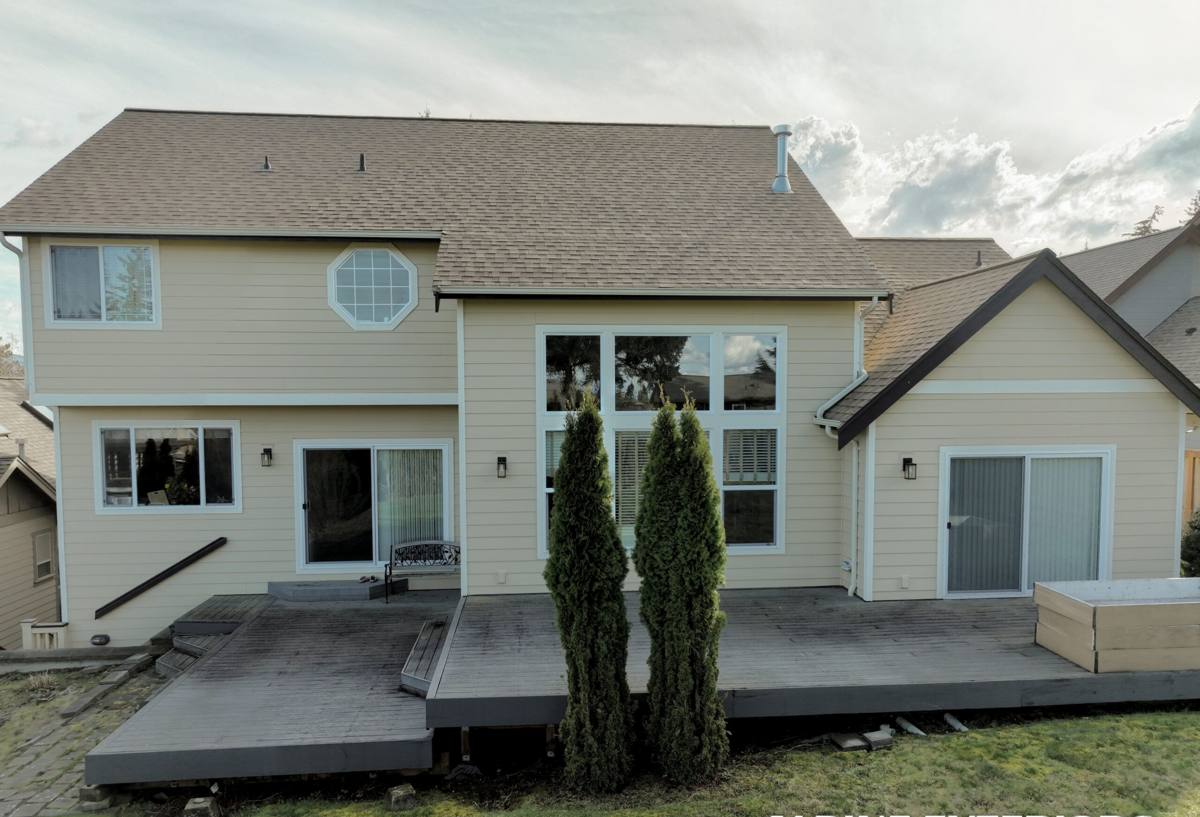
Repair or Replace? How We Make That Call
Not every deck in Mount Vernon needs to be torn out. We look at the structure first, not just the decking surface, because the decking is the cheapest and easiest part to fix. The framing, ledger connection, and footings are what determine whether a deck is safe and worth building on top of.
Signs That Point to Replacement
- Soft, spongy, or spalling spots in the ledger board where the deck attaches to the house
- Joists that are visibly cupped, split, or soft when probed with a screwdriver
- Rust streaking or crumbling around structural fasteners and post bases
- Persistent moss or algae growth on framing members, not just the surface boards
- A deck built without proper flashing at the house connection, which is common on older Skagit County homes
- Guardrails, stair stringers, or posts that flex or feel loose under normal use
If the framing is sound and the problems are limited to worn decking boards or a few damaged rails, a repair or resurfacing can be the honest answer. We will tell you that directly rather than push a full rebuild you do not need.
What a Correct Deck Replacement Actually Involves
A deck replacement is not just pulling off old boards and screwing down new ones. Done right, it starts below the surface.
Structure First
We evaluate and, where needed, rebuild the ledger connection with proper flashing so water is directed away from the house rather than into the rim joist. This single detail is responsible for a large share of the hidden rot we find in older Mount Vernon decks, because many were built before current flashing standards were common practice.
Footings and Posts
Footings need to sit below frost depth and bear on undisturbed or properly compacted soil. Skagit County's mix of clay-heavy and low-lying soils means footing design matters more here than it does in areas with well-draining ground. Posts get set on bases that keep the wood off the concrete and off standing water.
Framing and Fasteners
Joists, beams, and hardware should all be rated for exterior and, in coastal-influenced air like ours, ideally rated for higher corrosion resistance than the minimum code allows. Cutting corners on fasteners is one of the most common ways a deck fails early in this climate — it is not usually the decking that gives out first, it is the connectors holding it together.
Decking, Rail, and Stairs
Only once the structure is right do we move to the visible finish work: decking material, guardrails, and stairs, all built to current code for height, baluster spacing, and load.
Choosing a Decking Material for Mount Vernon's Climate
There is no single "best" decking material — there is a best material for your budget, your maintenance appetite, and how much sun or shade your deck gets. In a climate with this much moisture and moss pressure, that last factor matters more than most homeowners expect.
| Material | How It Handles Our Climate | Maintenance | Typical Lifespan |
|---|---|---|---|
| Pressure-treated wood | Affordable, but needs consistent sealing to resist moisture and moss in shaded, damp spots | Annual cleaning, resealing every 2-3 years | 10-15 years with upkeep |
| Cedar | Naturally more rot-resistant, but still needs finish maintenance to stay ahead of moss and graying | Cleaning and finish renewal every 1-2 years | 15-20 years with upkeep |
| Composite decking | Resists rot and moisture well; capped boards resist moss staining better than uncapped | Periodic washing, no sealing needed | 25-30+ years |
| PVC decking | Fully synthetic, best moisture resistance of the common options; performs well in shaded, damp areas | Occasional washing | 30+ years |
We do not push one product line over another as a rule of thumb. We will walk your specific site — how much shade it gets, how it drains, what the framing underneath can support — and tell you honestly which materials make sense there and which ones you would be fighting for the life of the deck.
Our Deck Replacement Process
- On-site evaluation. We inspect the existing deck, ledger, framing, and footings, and check for moisture damage that is not visible from the surface.
- Honest scope and estimate. You get a clear breakdown of what needs to be replaced structurally versus what is cosmetic, with material options and pricing explained.
- Permitting. We handle the permit application and inspections required for your project rather than leaving that on you.
- Demolition and disposal. Old decking, framing, and debris are removed and hauled off cleanly.
- Structural rebuild. Footings, posts, beams, joists, and ledger flashing are built or corrected to current code.
- Finish work. Decking, guardrails, and stairs are installed to your chosen material and layout.
- Final walkthrough. We go over the finished deck with you, including basic care guidance specific to the material you chose.
Permits and Code Considerations for Mount Vernon Homes
Deck replacement projects in Skagit County typically require a building permit once you are rebuilding structural elements, not just swapping surface boards. Permit review checks things like footing depth, ledger attachment, guardrail height, and stair geometry. Skipping this step is not just a legal risk — it is also how homeowners end up with decks that fail an inspection when they go to sell the house. We pull permits and coordinate inspections as a standard part of a replacement project so you are not left tracking down paperwork on your own.
Maintaining a New Deck in This Climate
Even a well-built deck needs some seasonal attention here. The goal is to stay ahead of moss and moisture rather than dealing with it once it has taken hold.
- Sweep leaves and debris off the deck regularly through fall — trapped organic matter holds moisture and feeds moss
- Rinse the deck surface a few times a year to clear early moss and algae growth before it establishes
- Check that gaps between boards stay clear so water can drain rather than pool
- Inspect the ledger flashing and any visible fasteners once a year for rust or gaps
- Trim back overhanging vegetation that keeps sections of the deck shaded and damp
- Reseal wood decking on the schedule appropriate to the product — do not wait until it is already graying and absorbing water
Why Hiring a Crew That Already Works in Mount Vernon Matters
A deck built to a generic national code minimum is not the same as a deck built for how water actually behaves on a Skagit County property. Crews who work regularly in Mount Vernon and the surrounding Anacortes area already know which framing and fastener upgrades are worth the extra cost here, how local soil conditions affect footing work, and what the permitting office actually looks for during inspection. That local familiarity shows up later as fewer callbacks, fewer surprises, and a deck that is still solid well past the point when a corner-cut build would be showing problems.
We also stand behind the work with a clear understanding of what a deck in this climate needs to hold up — not a one-size-fits-all approach carried over from a drier region.
Get a Straightforward Estimate
If your deck is showing its age or you are not sure whether it needs repair or full replacement, we are happy to take a look and give you an honest assessment. Fill out the form below for a free, no-pressure estimate on your Mount Vernon deck replacement project.