 Anacortes Exterior
 Why Fidalgo Island Decks Wear Out Faster Than You'd Expect
If you own a home on Fidalgo Island, you already know the deck doesn't age the same way it would somewhere inland. Between the marine air coming off the surrounding waters, the long stretch of wet months typical of Skagit County, and the shaded, moisture-holding spots common on wooded lots, decks here take a beating that a lot of manufacturers never designed for. Salt-laden air accelerates corrosion on fasteners and hardware. Driving rain, especially the sideways kind that comes with fall and winter storms, finds its way into every seam, screw hole, and board gap that isn't properly flashed or spaced. And the long moss season — often stretching from late fall well into spring — turns any deck that doesn't get sun or airflow into a slick, green problem within a year or two of neglect.
None of this means a deck on Fidalgo Island is doomed. It means the deck has to be built for this specific environment, not just built to a generic spec sheet. That's the difference between a deck that needs replacing again in twelve years and one that holds up for decades with normal upkeep.
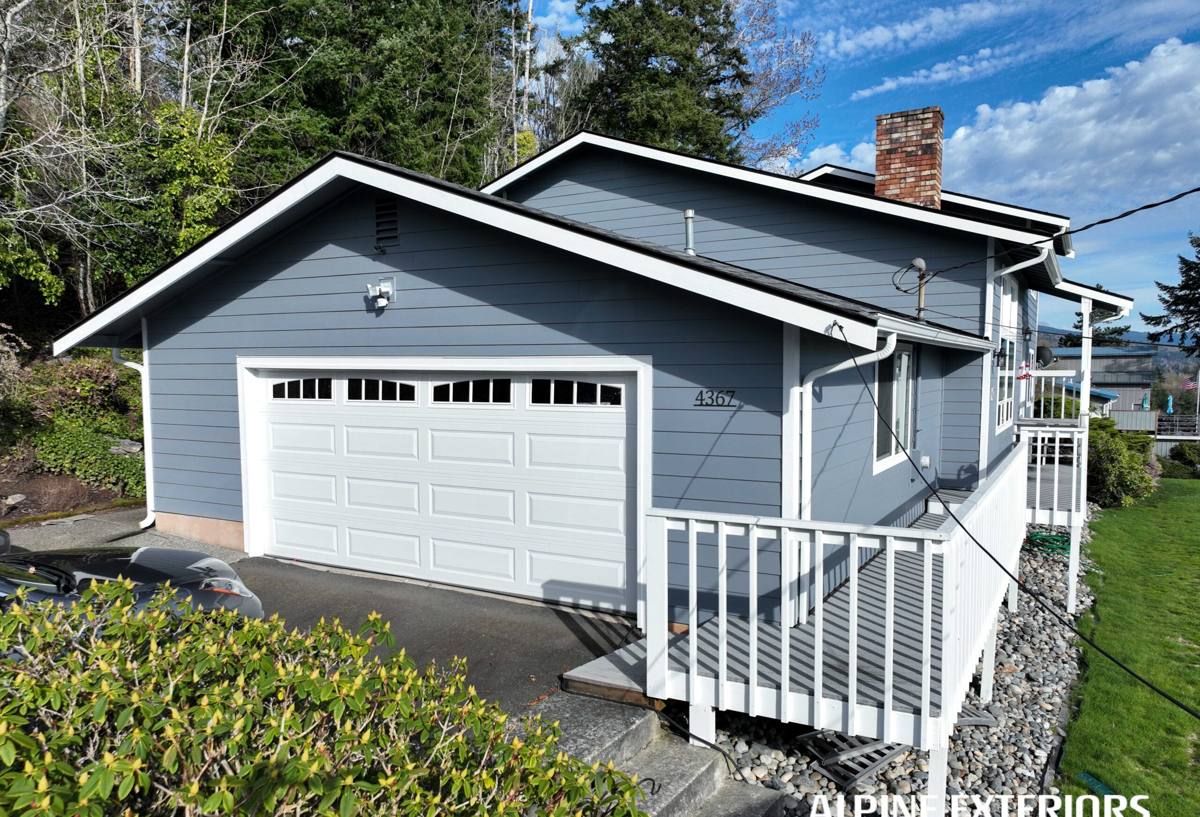
Signs Your Deck Needs Replacement, Not Just Repair
Not every tired-looking deck needs to be torn out. But there are signs that point past repair and into replacement territory, and it's worth knowing the difference before you spend money patching something that's structurally done.
- Soft or spongy spots in the decking or framing when you walk across them
- Visible rot at the ledger board — where the deck attaches to the house — which is the single most common failure point in this climate
- Rust streaking or crumbling around fasteners and joist hangers
- Persistent moss or algae growth that returns within weeks of cleaning
- Railings that flex or feel loose under normal pressure
- Boards that are cupping, splitting, or delaminating across large sections rather than a few isolated spots
A deck with one or two of these issues in isolated areas might be a repair candidate. A deck with rot at the ledger, failing framing, and widespread surface damage is usually more cost-effective to replace outright than to keep patching piece by piece.
What a Correct Deck Replacement Actually Involves
Structural Framing and the Ledger Connection
The framing is where a deck's lifespan is really decided, and it's also the part homeowners see the least of once the decking boards go down. On a home exposed to driving rain and salt air, the ledger board — the piece that bolts the deck to the house — needs proper flashing to keep water from tracking behind it and into the rim joist or wall sheathing. This is one of the most common places we find hidden rot on older Fidalgo Island decks, because the original flashing was either missed, installed incorrectly, or has simply failed over time.
Beyond the ledger, we look at joist spacing, beam sizing, and post footings. Footings need to be set below frost depth and sized for the load they're carrying, not just poured to whatever depth was convenient. Undersized or shallow footings are a common shortcut on older or budget-built decks, and they show up later as sag, bounce, or leaning posts.
Fasteners and Hardware
In a salt air environment, the wrong fastener choice will rust and stain a deck within a few seasons regardless of how good the decking material is. We use fasteners and structural hardware rated for coastal and treated-lumber exposure — stainless steel or heavy hot-dip galvanized, matched to the connector manufacturer's specification. Mixing metals, or using standard exterior-grade screws where a marine-rated fastener is called for, is a shortcut that shows up as rust bleed and weakened connections well before the decking itself wears out.
Choosing the Right Decking Material for This Climate
There's no single "best" decking material for every home — it depends on your budget, how much sun the deck gets, and how much upkeep you actually want to do. Here's how the common options stack up specifically against salt air, rain, and moss:
| Material | Moisture & Salt Air Behavior | Moss Resistance | Maintenance |
|---|---|---|---|
| Pressure-treated wood | Good when properly sealed and maintained; can check and warp if neglected | Needs regular cleaning in shaded areas | Annual cleaning, periodic re-staining or sealing |
| Cedar | Naturally rot-resistant, but surface still weathers gray without maintenance | Moderate — still needs cleaning in damp, shaded spots | Regular sealing to preserve color and resist moisture |
| Composite decking | Very good — doesn't absorb water or rot like wood | Better than wood, though algae can still grow on the surface in constant shade | Low — periodic washing, no staining or sealing |
| PVC / capped polymer decking | Excellent — fully resistant to moisture absorption and rot | Good, especially with textured, algae-resistant surface finishes | Lowest — occasional washing |
We don't push one product over another as a default. What we will tell you honestly is that on shaded, low-airflow decks close to the water, low-maintenance materials tend to make more sense long term, simply because the moisture and moss cycle here is relentless and wood-based products require real, consistent upkeep to keep pace with it. On sunnier, more open sites, a well-maintained wood deck can perform just fine and gives you a different look and feel underfoot.
Our Deck Replacement Process
- On-site assessment — we inspect the existing deck, ledger connection, framing, and footings to understand what's actually failing and why, not just what's visible on the surface.
- Material and layout discussion — we walk through decking material options, railing style, and layout changes based on your budget and how you use the space.
- Permitting — where required, we handle the permit process with the City of Anacortes before work begins.
- Demolition and disposal — the old deck is removed and hauled off, including a check for hidden damage to the house structure behind the ledger.
- Framing and flashing — new footings, framing, and ledger flashing are installed to current structural standards, not just matched to what was there before.
- Decking, railing, and finish work — boards, railings, and any stairs are installed with fastener spacing and gapping set for proper drainage and airflow.
- Final walkthrough — we go over the finished deck with you, including what maintenance it will and won't need going forward.
Permits and Code Considerations
Most deck replacements that are attached to the home, elevated above a certain height, or involve new footings require a building permit through the City of Anacortes. Guardrail height, baluster spacing, and stair requirements are governed by code and aren't optional details — they're safety requirements that also protect you if you ever sell the home and it goes through an inspection. We handle the permitting and inspection process as part of the job rather than leaving it for the homeowner to sort out, and we build to code as a baseline, not as an upsell.
Maintenance That Actually Matters Here
Whatever material you choose, a little seasonal attention goes a long way in this climate. Here's what we recommend regardless of decking type:
- Sweep debris and standing leaves off the deck regularly, especially in fall — trapped organic matter is what feeds moss and algae growth
- Rinse or gently wash the surface a few times a year to interrupt the moss cycle before it takes hold
- Check fastener heads and railing connections annually for rust staining or looseness
- Keep gutters and downspouts near the deck clear so runoff isn't dumping extra water onto the structure
- For wood decks, plan on re-sealing or re-staining on a regular cycle rather than waiting until the wood looks gray and dry
- Trim back vegetation that's shading the deck and keeping it damp longer than it needs to be
Why Hiring a Crew That Already Works Fidalgo Island Matters
A deck built to a generic national spec sheet isn't necessarily built for a marine, high-rainfall environment like this one. Ledger flashing details, fastener selection, and material recommendations that work fine in a dry inland climate can fall short here within a few years. Working with a contractor who's replaced decks on Fidalgo Island and elsewhere around Anacortes means the flashing details, fastener choices, and footing depths are already dialed in for what this specific climate does to a deck over time — not something being figured out on your project.
It also means someone who's familiar with the City of Anacortes permitting process, understands how exposure and shade vary from one part of the island to another, and can give you a straight answer about what material and build approach actually makes sense for your specific site — not just what's easiest to sell.
Get a Straight Answer About Your Deck
If your deck is showing rot, rust, persistent moss, or just feels tired and outdated, we're happy to take a look and give you an honest read on repair versus replacement. There's no pressure and no pushy sales pitch — just a clear assessment and a straightforward estimate. Fill out the form below to get started.