 Anacortes Exterior
 Why Roofs in Bow Wear Out Differently Than the Warranty Assumes
Shingle and metal roofing warranties are written for average conditions. Bow doesn't have average conditions. Sitting near Samish Bay in unincorporated Skagit County, homes here deal with a mix of salt-tinged air off the water, driving rain that comes in sideways during winter storms, and heavy tree cover that keeps roof surfaces shaded and damp for weeks at a time. Any one of those factors will shorten a roof's service life. Together, they add up faster than most homeowners expect, which is why a roof that looks "fine" from the ground can already be failing underneath.
A roof replacement done right for a Bow property isn't just about swapping old shingles for new ones. It's about building a roof system that's matched to this specific combination of salt exposure, rain volume, and shade.
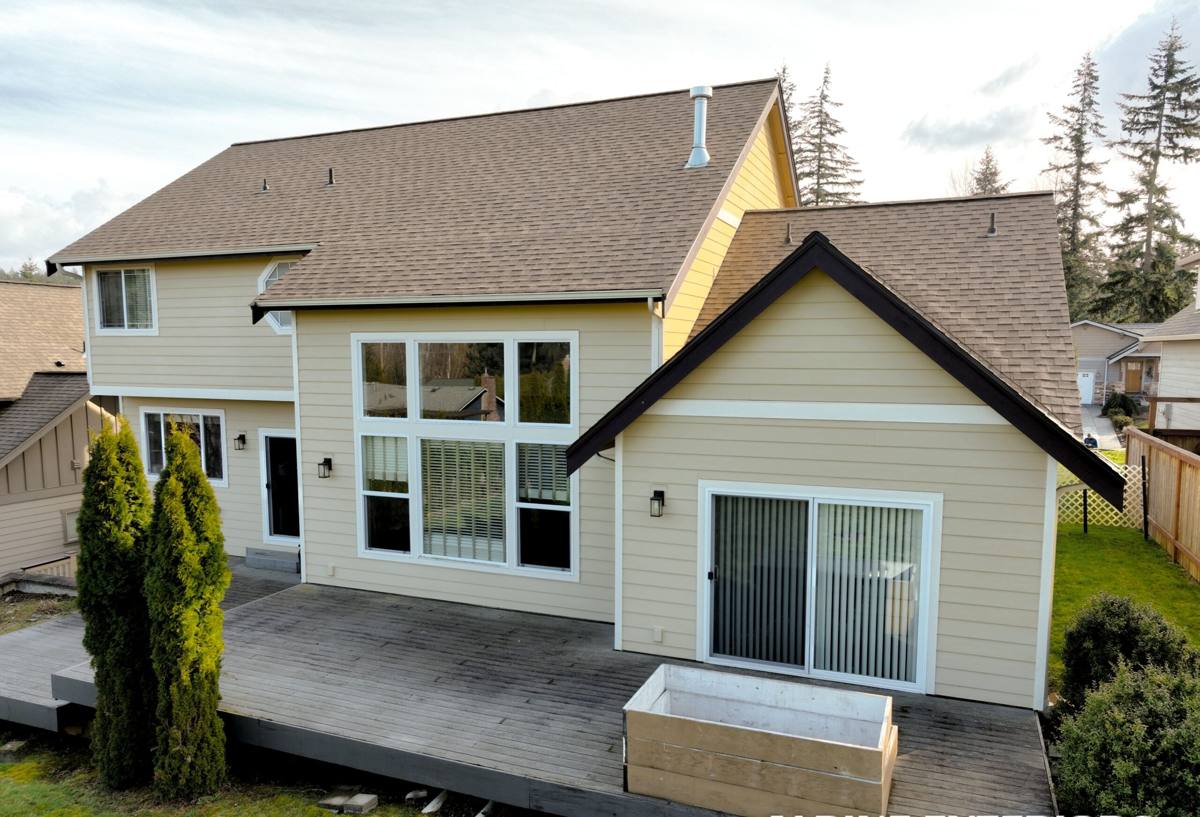
What the Local Climate Actually Does to a Roof
Salt Air and Metal Fatigue
Coastal and near-coastal air carries fine salt particles that settle on every exposed surface, including your roof. Over years, that salt accelerates corrosion on unprotected fasteners, flashing, and metal roofing panels. It's not dramatic — you won't see it happen — but it shows up eventually as rust streaking, pitted metal, and fasteners that back out or fail early. Roofing hardware and flashing metals need to be chosen with that exposure in mind, not just picked for lowest cost.
Wind-Driven, Driving Rain
Skagit County's winter storms don't just drop rain straight down — wind pushes it sideways and up under shingle edges, around vent boots, and into any gap in the flashing. A roof built for calmer conditions can handle vertical rain fine and still leak in a Bow storm because the water is being driven horizontally, not falling with gravity. This is why underlayment choice and flashing detail work matter more here than in drier, calmer climates.
Moss, Shade, and Trapped Moisture
Between tree cover and the region's long, wet, overcast stretch of the year, moss has ideal growing conditions on north-facing and shaded roof slopes for months at a stretch. Moss isn't just cosmetic. Its root structure lifts shingle edges, holds moisture against the roof deck, and creates channels for water to travel sideways instead of shedding off. A roof that's been fighting moss for years often has hidden deck damage well before any interior leak shows up.
Signs Your Bow Home Needs Full Replacement, Not Another Repair
Repairs make sense when the damage is isolated and the roof underneath is still sound. Replacement becomes the right call once the roofing system as a whole is compromised. Watch for:
- Granule loss heavy enough that you can see bare, shiny patches on shingles
- Moss that keeps returning within a season or two of cleaning, even in shaded spots
- Soft or spongy decking felt underfoot in the attic, or daylight visible through the roof boards
- Rust staining or corrosion around flashing, vent boots, or metal valleys
- Curling, cupping, or cracked shingles across multiple slopes rather than one localized area
- Repeated leaks around the same chimney, skylight, or valley despite past patch jobs
- A roof that's 20+ years old (asphalt) or showing widespread wear consistent with its expected lifespan
If you're only seeing one or two of these in a small area, a repair may still be reasonable. If several apply across the roof, patching individual spots usually just delays a bigger bill.
Choosing a Roofing System That Holds Up in Bow
Not every roofing product performs the same way under salt air, sustained rain, and moss pressure. Here's how the common options compare for this specific setting:
| Material | Salt Air / Moisture Behavior | Moss Resistance | Typical Lifespan Here |
|---|---|---|---|
| Architectural asphalt shingle | Good with proper flashing and underlayment; algae-resistant granules help | Moderate — benefits from zinc/copper strips at ridges | 20–25 years |
| Standing seam metal | Very good if fasteners and flashing are coastal-rated; sheds water fast | Strong — smooth surface discourages growth | 40+ years |
| Synthetic/composite shake or slate | Good; resists moisture absorption better than natural wood | Good, with routine cleaning | 30–50 years |
| Natural cedar shake | Poor in sustained damp shade; absorbs and holds moisture | Weak — a common moss and rot host in shaded, wet conditions | Highly variable, often shortened here |
Why We Steer Homeowners Away From Certain Products in This Setting
Natural wood shake has a real appeal, but our professional standard is to be upfront about how it performs where shade, standing moisture, and a long wet season are the norm — as they are around Bow. Wood absorbs and holds moisture longer than manufactured alternatives, which feeds moss growth and accelerates rot at the deck. That's a maintenance and moisture trade-off worth knowing before you commit, not a knock on any specific brand.
What a Correct Roof Replacement Actually Involves
Full Tear-Off and Deck Inspection
Layering new shingles over old is a shortcut that hides problems instead of fixing them. A proper replacement strips the roof to the deck so we can actually see the plywood or plank sheathing underneath — which matters a lot in a climate where moss and slow leaks can rot decking without any obvious interior sign. Soft or delaminated sections get replaced before anything new goes down.
Underlayment and Ice-and-Water Barrier
Given how much wind-driven rain this area sees, we don't treat underlayment as an afterthought. Synthetic underlayment holds up better than old-style felt paper under prolonged damp conditions, and self-adhering ice-and-water shield at eaves, valleys, and around penetrations gives a second line of defense exactly where wind-driven rain is most likely to force its way under the roofing material.
Flashing Details
Most roof leaks trace back to flashing, not the field shingles themselves. Chimneys, skylights, valleys, and wall-to-roof transitions all need flashing sized and lapped correctly, using metal that can handle salt exposure without corroding out early.
Ventilation
A roof deck that can't breathe stays damp longer after every rain event, which is exactly what feeds moss and slow rot in a shaded, wet climate. Balanced intake and exhaust ventilation helps the roof dry out between storms instead of staying saturated through the whole wet season.
Our Replacement Process, Step by Step
- On-site inspection of the existing roof, attic ventilation, and any visible moss, staining, or deck concerns
- Written estimate that spells out materials, scope, and any deck repair contingencies before work starts
- Protection of landscaping, gutters, and the areas around the home during tear-off
- Full tear-off down to the deck, with sheathing inspected and repaired as needed
- Installation of underlayment, ice-and-water barrier, flashing, and the new roofing material
- Ventilation check and correction if intake or exhaust airflow is inadequate
- Final walk-through and cleanup, including a magnetic sweep for stray fasteners
Cost Factors for a Bow Roof Replacement
Every roof is different, but the same handful of factors drive most of the variation in price for homes in this area:
| Factor | Why It Matters |
|---|---|
| Roof size and number of planes | More square footage and more complex geometry (valleys, dormers) means more material and labor |
| Deck condition | Rotted or soft sheathing found during tear-off adds repair cost, especially on older, moss-affected roofs |
| Material choice | Metal and composite systems cost more upfront than asphalt but last longer under local conditions |
| Roof pitch and access | Steep slopes or limited equipment access on rural or tree-covered lots add time and safety requirements |
| Ventilation upgrades | Correcting inadequate attic airflow adds a modest cost but protects the new roof's lifespan |
| Tree cover and debris | Heavily shaded lots may need extra moss-prevention measures like zinc strips |
Why Hiring a Crew That Already Works in Bow Matters
Bow isn't downtown Anacortes. It's a smaller, more rural community, and that changes how a roofing job actually runs. Lots here often have well and septic systems to work around, longer driveways or gravel access, and mature tree cover that affects both staging equipment and how much sun (or shade) a given roof slope gets — which in turn affects moss risk and material choice. Permitting and inspection also run through Skagit County rather than a city building department, and knowing that process ahead of time keeps a project from stalling on paperwork.
A crew that's already worked in and around Bow isn't guessing at any of this. They know to check for well covers and septic components before setting up equipment, they've seen how moss behaves on shaded lots near the water, and they're not learning the county's permitting steps for the first time on your project.
Maintenance After Your New Roof Goes On
A well-installed roof still benefits from a little ongoing attention in this climate:
- Keep gutters clear so water isn't backing up under the roof edge during heavy rain
- Trim back overhanging branches where practical to reduce shade and debris buildup
- Have moss growth treated early rather than left to spread across a full slope
- Schedule a periodic visual check after major windstorms, since flashing and fasteners take the brunt of wind-driven rain
If your Bow home's roof is showing its age or you just want an honest read on what shape it's really in, we're happy to take a look. Reach out through the form below for a free, no-pressure estimate.