 Anacortes Exterior
 West Anacortes Roofs Work Harder Than Most
Homes on the west side of Anacortes sit close enough to the water that salt-laden air is part of daily life, not an occasional nuisance. That air carries moisture and fine salt particles that settle on roofing materials year-round, and combined with Skagit County's long wet season, it creates conditions that push asphalt shingles harder than they'd work in a drier, inland part of the state. Add in driving rain that comes sideways off Rosario Strait during winter storms, and a moss season that can stretch from fall through spring under the area's tree cover, and you've got a roof that needs to be built and maintained with those specific stresses in mind, not just installed to a generic spec.
We're not describing anything exotic here. Asphalt shingles are still the right, cost-effective choice for the vast majority of West Anacortes homes. But the difference between a roof that holds up for its full rated life and one that starts showing granule loss, moss intrusion, or leaks after a handful of winters usually comes down to details in the installation and the materials chosen — details that matter more here than they would somewhere with milder weather.
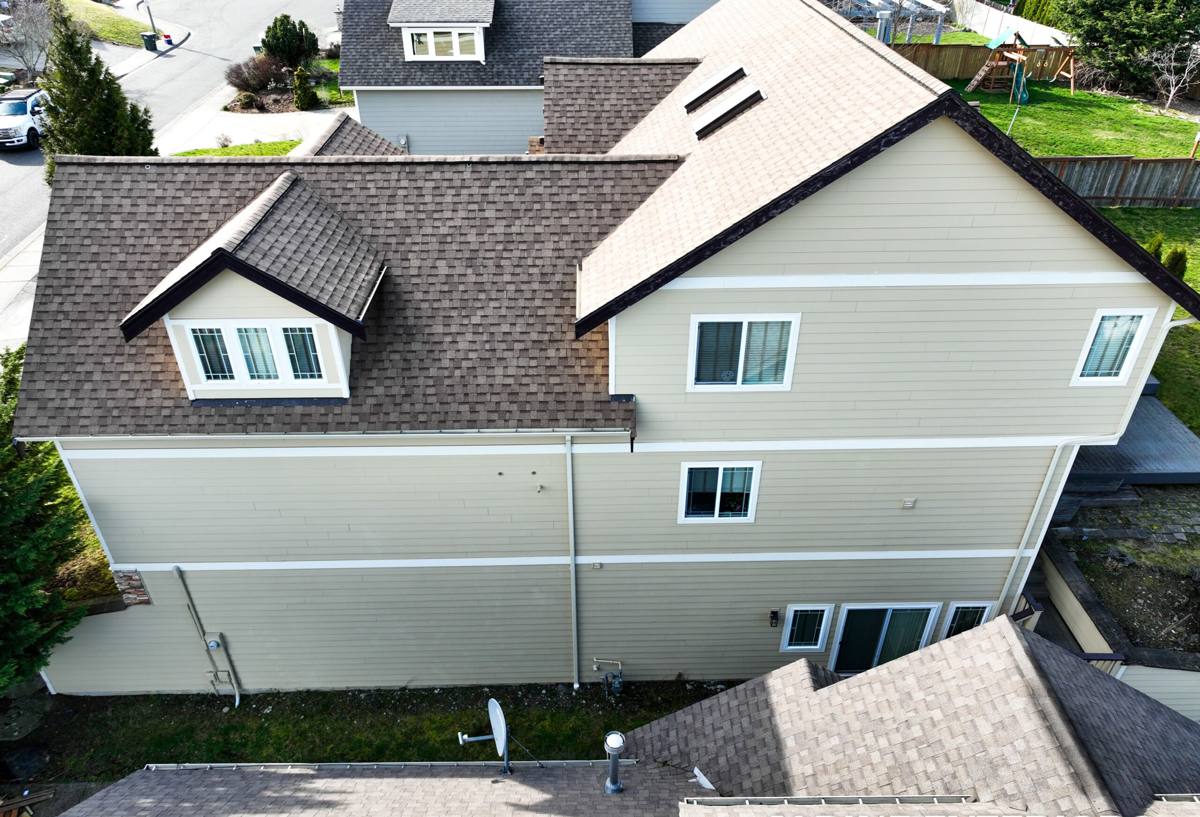
What a Correct Installation Actually Involves
Underlayment That Backs Up the Shingles
Shingles are the visible layer, but the underlayment underneath is what protects your roof deck if wind-driven rain ever gets past the shingle surface — and on exposed West Anacortes lots, it eventually will, even on a well-installed roof. We use synthetic underlayment as standard and add self-adhered ice-and-water membrane at vulnerable spots: eaves, valleys, and around any penetration like a chimney or vent stack. That membrane seals around fastener penetrations, which matters a lot more in a climate where wind-driven rain can find its way sideways under a shingle edge.
Ventilation That Matches Our Humidity
A roof that isn't ventilated correctly traps moisture in the attic, and in a marine climate that moisture doesn't dry out the way it would in a drier region — it lingers, and it's a major contributor to premature deck rot and moss growth on the underside of sheathing. We balance intake at the soffits with exhaust at the ridge so air actually moves through the attic space rather than stagnating in pockets.
Flashing and Valleys Done Right
Most roof leaks we get called out for don't start in the open field of shingles — they start at flashing: around chimneys, skylights, dormers, and where two roof planes meet in a valley. We flash these areas with new metal every time we do a full replacement rather than reusing old flashing, and we detail valleys so water sheds fast instead of pooling, which matters when Skagit County gets a heavy rain event and your roof needs to move a lot of water off quickly.
Fastening for Wind Exposure
West-facing and elevated lots in this area catch more wind than roofs tucked into more sheltered parts of town. We follow manufacturer nailing patterns exactly — correct nail count, correct placement, correct depth — because under-driven or over-driven nails are one of the most common causes of shingles lifting or blowing off in a storm, and it's a detail that's invisible once the roof is finished but shows up the first time a real windstorm comes through.
Choosing a Shingle That Handles Salt Air and Moss
Not every asphalt shingle product is built the same, and in a coastal, tree-covered environment like West Anacortes, the differences matter more than they would in a mild inland suburb. We steer homeowners toward algae-resistant (AR) shingles as a baseline — these are treated with copper or zinc granules that resist the blue-green algae responsible for the dark streaking you see on older roofs in wet climates. It's a modest upcharge that pays for itself in appearance alone.
| Shingle Type | Typical Lifespan | Wind Rating | Best Fit For |
|---|---|---|---|
| 3-tab asphalt | 15–20 years | Lower (60–70 mph) | Budget-conscious projects, simpler rooflines |
| Architectural (laminate) | 25–30 years | Moderate-high (110–130 mph) | Most West Anacortes homes — better wind and moisture performance |
| Impact-resistant architectural | 25–30+ years | High | Exposed sites, homeowners wanting extra storm durability |
Architectural shingles have become the practical default for most of our West Anacortes projects. They're heavier, they lie flatter against the deck (which reduces the wind's ability to get under an edge), and their higher wind ratings are a real advantage on a lot that catches weather off the water. We'll walk you through the actual product lines and warranty terms during your estimate rather than push one option — the right shingle depends on your roof's exposure, your budget, and how long you plan to stay in the home.
Moss Is a Maintenance Issue, Not a Bad Luck Issue
West Anacortes' tree cover is one of the things people love about the area, but overhanging branches also mean shade, damp debris, and a steady supply of moss spores landing on your roof. Moss doesn't just look bad — as it grows, it lifts shingle edges and holds moisture against the granule surface, which accelerates wear in exactly the spots where shingles are already most vulnerable.
A correctly installed roof with the right materials resists moss far better than an older or poorly ventilated one, but no asphalt roof in this part of the county is moss-proof forever. Zinc or copper strips installed near the ridge on a new roof help suppress regrowth over time, and periodic soft washing (never pressure washing, which strips granules) keeps moss from establishing in the first place.
Our Process for a West Anacortes Roof Replacement
- On-site inspection. We look at the deck condition, current ventilation, flashing points, and how exposed the roof is to wind and rain from the water side.
- Honest scope and estimate. You get a clear breakdown of what's being replaced, what shingle and underlayment we recommend and why, and a real cost range — no vague allowances.
- Deck repair as needed. Any soft or rotted decking gets replaced before a single shingle goes down. Installing new shingles over a compromised deck just hides a problem.
- Underlayment, flashing, and shingle installation. Done in the sequence and to the nailing pattern described above, not shortcuts.
- Final walkthrough. We go over the finished roof with you, including ventilation and any moss-prevention measures installed.
Signs Your West Anacortes Roof Needs Attention Now
Because of the moisture and moss factors specific to this area, roof problems here often show up differently than they would in a drier climate. Watch for:
- Dark streaking or visible moss patches, especially on north-facing or shaded slopes
- Granules collecting in gutters or at the base of downspouts
- Shingle edges that look curled, lifted, or cupped
- Soft spots or sagging when walking the attic (or visible daylight through the roof deck)
- Water stains on interior ceilings, particularly near chimneys, skylights, or valleys
- Missing or torn shingles after a windstorm
Any one of these on its own isn't necessarily an emergency, but catching them early is almost always cheaper than waiting for a leak to show up inside the house.
Why Hiring a Crew That Already Works This Area Matters
Roofing crews who mostly work drier, less exposed parts of Skagit County can still do competent work, but they don't always account for the specific combination of salt exposure, wind off the water, and heavy moss pressure that West Anacortes roofs deal with every year. A crew that regularly works this neighborhood knows which slopes tend to hold moss longest, which flashing details matter most given the local wind patterns, and how to sequence a roof replacement around this area's wetter stretches of the year. That local familiarity shows up in fewer callbacks and a roof that performs the way it's supposed to for its full rated life.
After Installation: Keeping the Roof Performing
A new roof isn't a "set it and forget it" investment in this climate. We recommend a visual check after major storms, gutter cleaning at least twice a year given the leaf and needle drop common around West Anacortes, and a professional look every few years to catch flashing wear or early moss regrowth before it becomes a bigger repair. Homeowners who stay on top of this simple maintenance routinely get the full expected lifespan — or longer — out of their roof.
If you're noticing any of the signs above, planning ahead for a roof that's getting older, or just want an honest opinion on what your West Anacortes home actually needs, we're glad to take a look. Fill out the form below for a free, no-pressure estimate.